There is something inherently nostalgic about a bowl of banana pudding, but this isn’t the watery, translucent dessert of cafeteria trays. This version is an architectural masterpiece, designed for those who appreciate the structural integrity of a dense, vanilla bean-flecked custard and the buttery crunch of premium shortbread.
The secret to this elevated banana pudding lies in the transition from a standard pudding to a mousse-like custard. By folding stiffly whipped cream into a chilled, egg-yolk-rich base, we create a texture that holds its own in a glass trifle dish without collapsing into a soup.
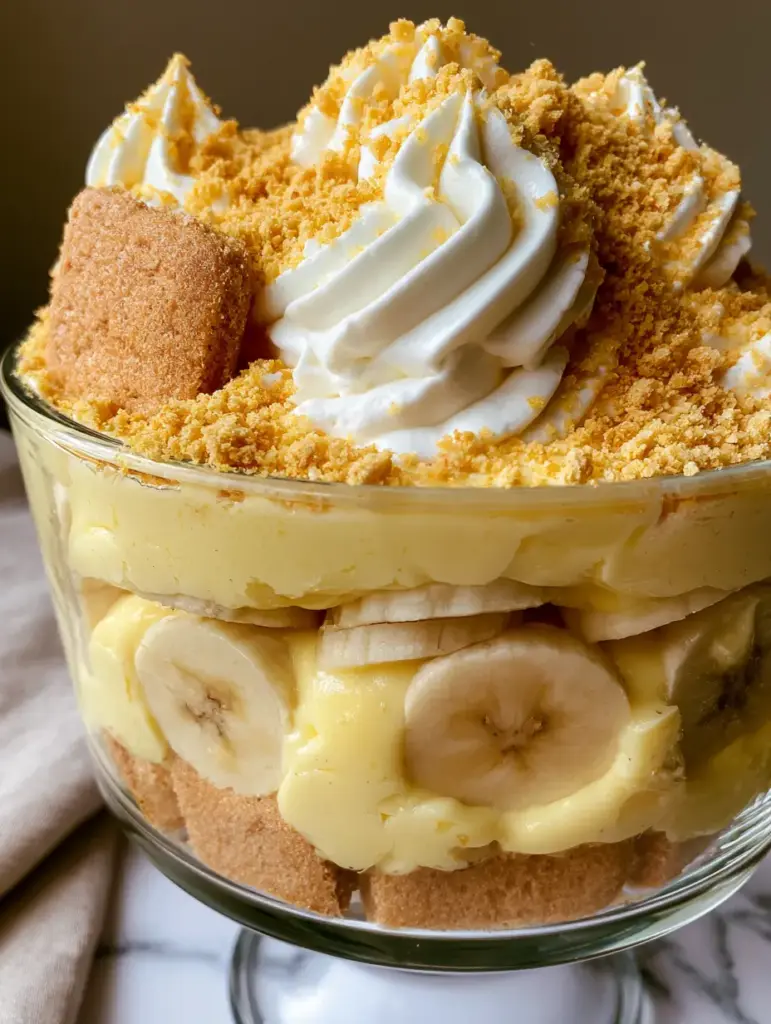
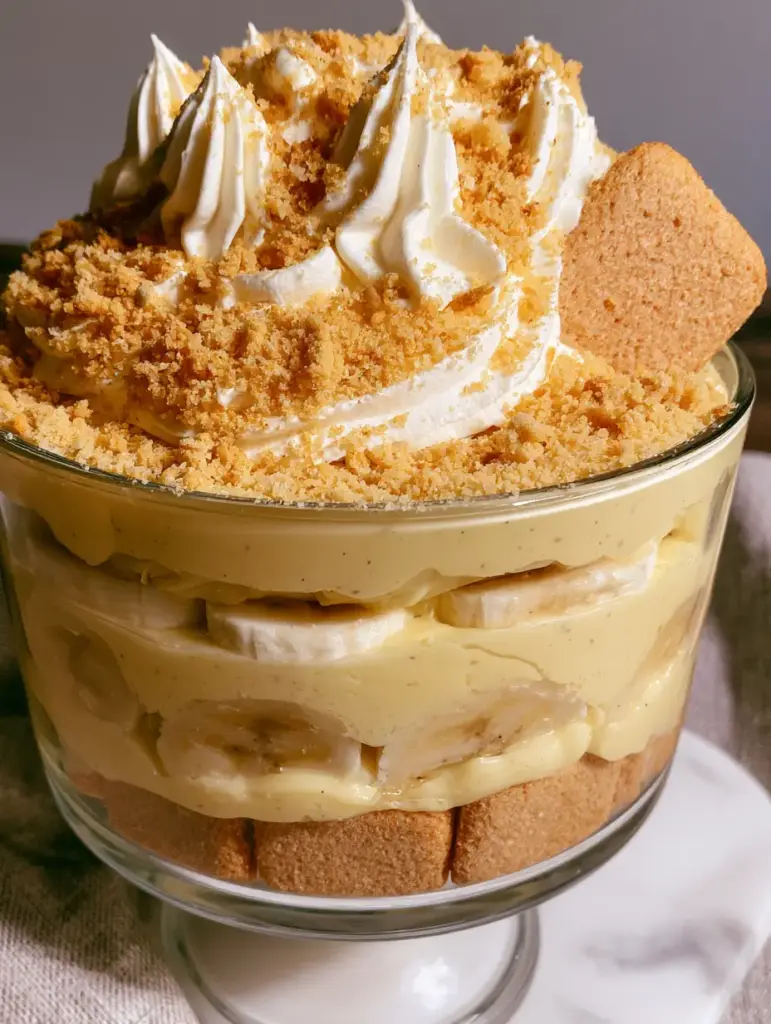
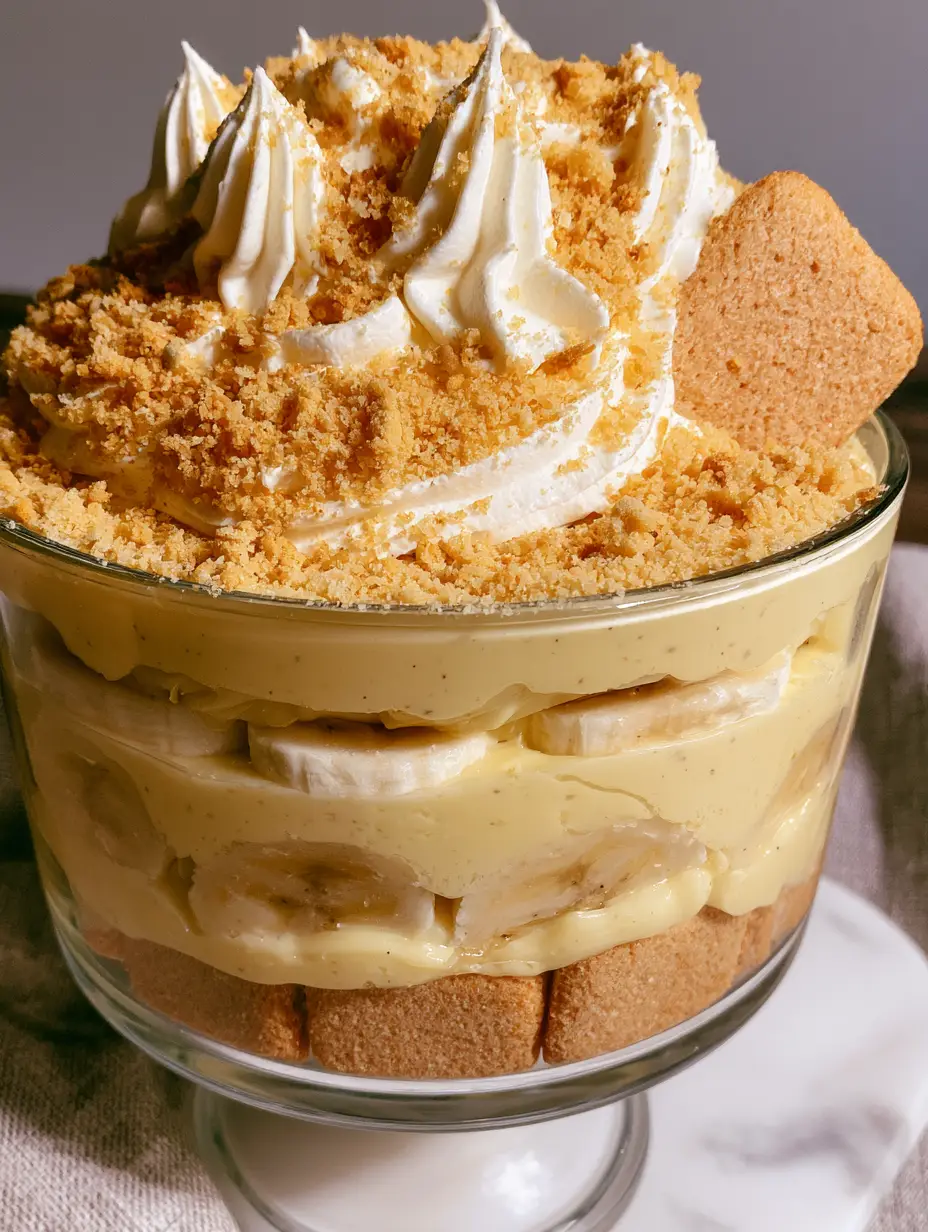
Every layer of this dessert is a study in contrast: the snap of square shortbread butter cookies, the velvet-smooth custard, and the firm, clean slices of ripe bananas. It is finished with architectural peaks of cream that catch the light, promising a sensory experience that is as visually stunning as it is delicious.
Why This Architectural Southern Dessert Stands Above the Rest
- Decadent Mousse Texture: Unlike traditional starch-heavy puddings, this custard is lightened with aeration, creating a “mousse” mouthfeel that dissolves slowly on the tongue.
- Buttery Shortbread Foundation: Replacing standard wafers with square shortbread cookies provides a higher fat content and a sturdier crumb, preventing the “soggy bottom” syndrome common in lesser recipes.
- Visible Vanilla Bean Flecks: Using real vanilla bean paste or whole beans adds deep, woody aromatic notes and a sophisticated visual cue of quality.
- Structural Integrity: This recipe is engineered to be non-runny, making it perfect for display in a macro-focused trifle presentation.
The Anatomy of a Perfect Vanilla Bean Custard Mousse
To achieve the pale yellow, thick consistency seen in our visual blueprint, we rely on high-quality dairy and precise temperature control. The base is a classic crème pâtissière, but with a higher ratio of egg yolks for richness.
Whole Milk and Heavy Cream: 2 cups (480ml) of whole milk and 1 cup (240ml) of heavy cream provide the fat necessary for a stable emulsion. The cream adds a luxurious weight that milk alone cannot achieve.
Egg Yolks: 6 large egg yolks act as the primary emulsifier and coloring agent. They provide that signature “pale yellow” hue without the need for artificial dyes.
Granulated Sugar: 3/4 cup (150g) of sugar sweetens the base without over-powering the delicate flavor of the bananas. It also aids in the structure of the egg foam during the tempering process.
Cornstarch: 1/4 cup (32g) of cornstarch is the “invisible” structural engineer here. It thickens the custard to a point where it can support the weight of thick-sliced bananas.
Vanilla Bean Paste: 1 tbsp (15ml) of vanilla bean paste is essential. The tiny black seeds are a critical visual element of the mousse-like custard.
Unsalted Butter: 2 tbsp (28g) of cold butter whisked in at the end adds a glossy finish and a “pudding” silkiness that lingers on the palate.
Square Shortbread Butter Cookies: 2 boxes (approx. 400g) of high-quality shortbread. These are denser than wafers and provide the “square” geometry required for the side-profile aesthetic.
Firm Ripe Bananas: 5-6 large bananas. They must be yellow with a few brown spots; too green and they lack sweetness, too brown and they lose the structural firmness needed for “thick-sliced” layers.
Essential Equipment for a Professional Trifle Display
To mimic the macro-shot perfection of our banana pudding, you will need a clear glass trifle dish or a deep glass bowl. The transparency is vital for showing off the “perfectly defined” layers.
A heavy-bottomed saucepan is non-negotiable for the custard to prevent scorching. You will also need a fine-mesh sieve to strain the custard, ensuring it is 100% lump-free before it chills.
For the architectural whipped cream peaks, a stand mixer or electric hand mixer is required to reach true stiff peaks. A piping bag with a large round tip can help in creating the specific “architectural” look mentioned in the blueprint.
Step-By-Step: Crafting the Dense Custard Base
1. Infusing the Dairy and Tempering Yolks
In your saucepan, combine the milk, 1 cup of cream, and the vanilla bean paste. Heat over medium until bubbles just begin to form around the edges (about 180°F / 82°C).
In a separate bowl, whisk the egg yolks, sugar, and cornstarch until the mixture turns a pale, straw color. This aeration is the first step toward that mousse-like texture.
Slowly drizzle half of the hot milk into the egg mixture while whisking constantly. This “tempering” prevents the eggs from scrambling, ensuring a smooth banana pudding foundation.
2. Thickening to a Mousse Consistency
Pour the tempered egg mixture back into the saucepan. Cook over medium-low heat, whisking vigorously, until the mixture thickens significantly and large bubbles pop on the surface.
Remove from heat and immediately whisk in the cold butter. The custard should be thick enough to coat the back of a spoon heavily—this is the “non-runny” texture we are after.
Strain through a fine-mesh sieve into a bowl and cover with plastic wrap, pressing it directly onto the surface to prevent a skin from forming. Chill for at least 4 hours.
3. The “Mousse” Transformation
Once the custard is cold and set, whip an additional 1 cup (240ml) of heavy cream to stiff peaks. Gently fold this into the chilled custard.
This folding process introduces air, transforming the dense pudding into a light, ethereal vanilla bean mousse that still maintains its architectural strength.
Assembly: The Science of Perfectly Defined Layers
The Shortbread Foundation
Begin by placing a single layer of square shortbread butter cookies at the bottom of the glass dish. Ensure they are placed snugly against the glass for that clean side-profile look.
Unlike a classic banana pudding recipe which uses round wafers, these square edges create a more modern, geometric aesthetic in the glass.
The Banana and Mousse Mid-Layers
Slice your firm bananas into 1/2 inch (1.25cm) thick rounds. Arrange a layer of bananas directly over the cookies, then top with a generous layer of the vanilla bean mousse.
Repeat this process twice more. As you work, use an offset spatula to push the mousse toward the edges of the glass, removing any air pockets that might ruin the macro-shot visual.
The Architectural Topping
For the final layer, whip 1.5 cups (360ml) of heavy cream with 2 tbsp (30g) of powdered sugar until stiff, architectural peaks form. Dollop or pipe these onto the top of the trifle.
Finely crush 4-5 shortbread cookies into a “golden dust” and sprinkle heavily over the peaks. Tuck one whole square butter cookie into the side of the cream at a 45-degree angle.
Finish with a single, fresh mint sprig placed off-center for a pop of color that contrasts against the pale yellow and white tones.
Expert Tips for Visual and Culinary Success
- Banana Oxidation: To keep your banana slices “firm and ripe” looking, toss them lightly in a teaspoon of lemon juice before layering. This prevents the enzymatic browning that can dull the look of the trifle.
- The “24-Hour Rule”: While the pudding looks great immediately, the shortbread needs about 4-6 hours to soften slightly into a cake-like consistency while still retaining a bit of bite.
- Temperature Control: Ensure your whipped cream is very cold before whipping; this is the only way to achieve the “stiff, architectural peaks” required for the garnish.
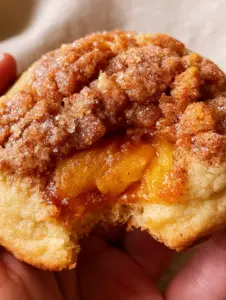
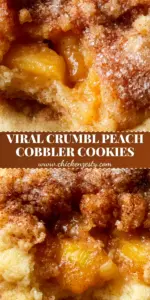
- Cookie Selection: If you can’t find square shortbread, you can use these peach cobbler cookies as inspiration for a fruitier twist, though the square shortbread is the key to the specific visual blueprint provided.
The Best Pairings for Southern Banana Pudding
This rich dessert benefits from a savory counterpoint. If you are serving this at a summer gathering, consider starting with a refreshing Chicken Caesar Pasta Salad or a spread of spicy appetizers.
The heat from Alabama firecrackers or traditional Southern fire crackers creates a wonderful “hot and cold” dynamic when followed by this chilled vanilla mousse.
For a complete seasonal menu, browse our curated summer dinner recipes to find the perfect main course to precede this showstopping banana pudding.
Storage and Make-Ahead Instructions
Banana pudding is best enjoyed within 24 hours of assembly. Beyond 48 hours, the bananas will begin to release moisture (syneresis), which can make the mousse runny and the cookies overly mushy.
Store in the refrigerator, loosely covered with plastic wrap. Do not freeze this dessert; the custard and whipped cream will separate upon thawing, destroying the “mousse-like” texture.
Frequently Asked Questions
While you can, the square shortbread butter cookies are denser and provide a sturdier structure that prevents the dessert from becoming too soggy compared to traditional wafers.
Toss your thick-sliced bananas in a small amount of lemon or pineapple juice. The acidity slows down the oxidation process, keeping the fruit looking fresh in the trifle dish.
For the best balance of textures, let the pudding sit in the refrigerator for 4 to 6 hours. This allows the cookies to soften slightly without losing their form.
The mousse texture is achieved by folding stiffly whipped heavy cream into the chilled custard base. This aerates the dense pudding while maintaining its structural integrity.
Runny pudding is usually caused by undercooking the cornstarch base or using bananas that are overripe and releasing too much moisture. Ensure the custard reaches a full boil to activate the starch.
The Ultimate Vanilla Bean Banana Pudding Recipe
Banana Pudding with Square Shortbread and Vanilla Bean Custard Mousse
Ingredients
Equipment
Method
- Heat milk, 1 cup cream, and vanilla bean paste in a saucepan until simmering.
- Whisk yolks, sugar, and cornstarch until pale yellow.
- Temper eggs with hot milk, return to heat, and cook until thick. Whisk in butter and chill 4 hours.
- Fold 1 cup of whipped cream into the chilled custard base.
- Layer square cookies, thick-sliced bananas, and mousse in a trifle dish.
- Top with stiff whipped cream peaks, crushed shortbread dust, a whole cookie, and a mint sprig.
Notes
Ensure custard is completely cold before folding in whipped cream to maintain mousse texture.
Join the Savory Vale Community
Crafting the perfect banana pudding is an act of love and precision. We hope this architectural approach to a Southern classic inspires your next kitchen adventure. If you enjoyed the dense textures and vanilla bean flecks of this recipe, please leave a comment below or share your results with us!
Don’t forget to follow us on Pinterest for more visually-driven recipe blueprints and culinary science tips. Tag us in your photos—we love seeing those stiff peaks in your own glass trifle dishes!