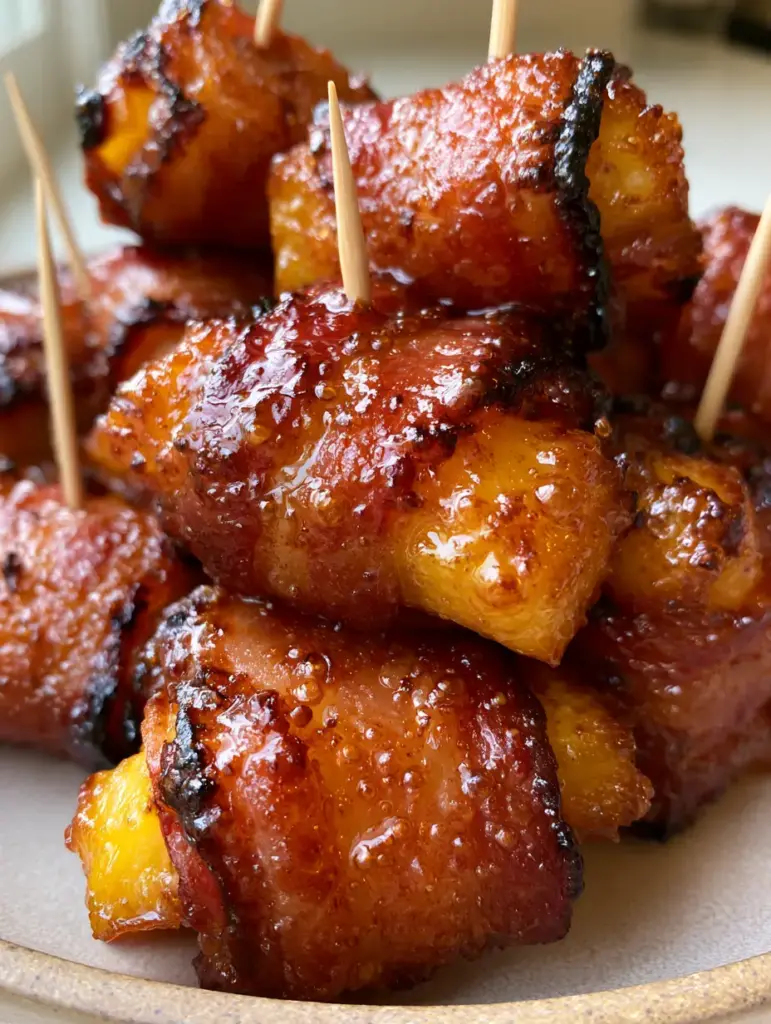
There is a specific kind of culinary magic that happens when the salty, smoky profile of thick-cut bacon meets the tropical, acidic sweetness of a sun-ripened pineapple. These bacon-wrapped pineapple bites are not just an appetizer; they are a masterclass in flavor contrast and textural harmony. Imagine a stack of these golden treasures resting on a neutral stoneware plate, their deep mahogany glaze shimmering under the light, reflecting a viscous, high-gloss sheen that promises a sticky, satisfying crunch in every bite.
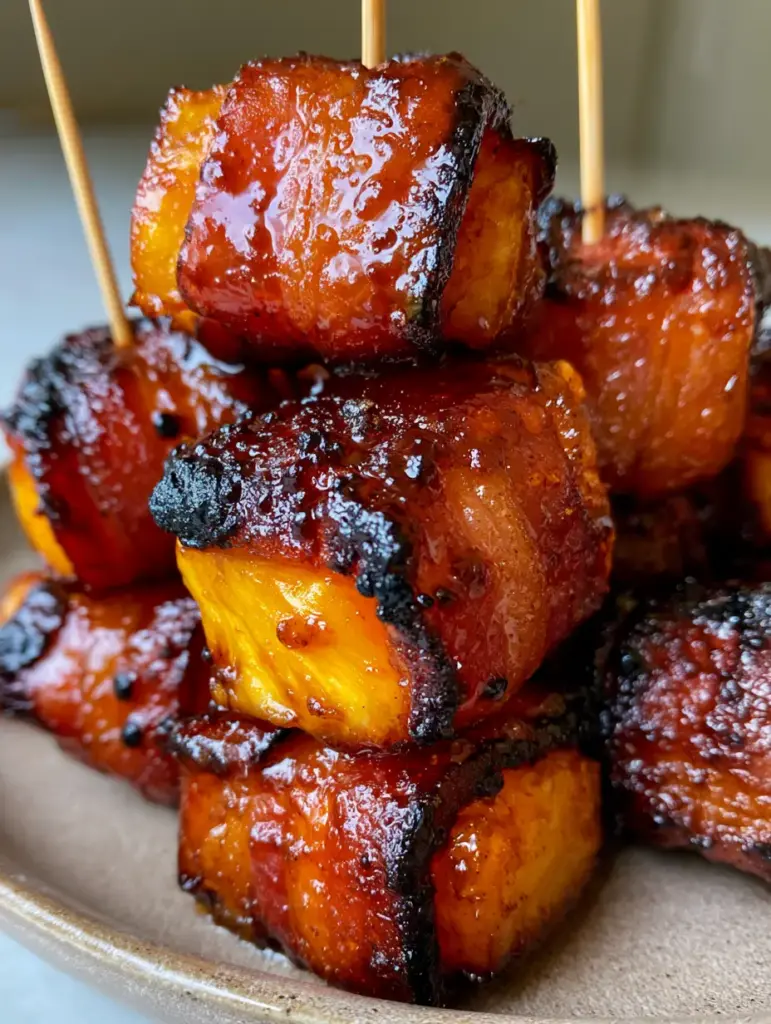
When you pull these from the air fryer or oven, you will notice tiny bubbles dancing in the glaze, a sign of perfectly localized caramelization. The bacon is rendered until the edges are charred and crispy, creating a structural shell around the vibrant golden yellow pineapple chunks. Whether you are prepping for a high-stakes game day or a sophisticated summer gathering, these bites—pierced with clean wooden toothpicks for easy grabbing—are designed to be the undisputed star of the spread.
Achieving the visual and sensory perfection described in our forensic blueprint requires more than just wrapping and heating. It requires understanding the science of the Maillard reaction and the precise temperature at which sugar transforms into a mahogany-colored nectar. We are going to dive deep into the techniques that ensure your bacon is never floppy and your pineapple never mushy, resulting in a professional-grade snack that looks like a high-end smartphone food photograph come to life.
The Essential Elements for Sweet and Salty Perfection
To recreate the exact “viscous mahogany” look and “rendered crispy” texture of our blueprint, the quality and type of your ingredients are paramount. We aren’t just looking for food; we are looking for specific chemical reactions that occur during the roasting process. Each component in this list serves a functional purpose in achieving that high-gloss, charred finish.
- Thick-Cut Smoked Bacon: 1 lb (450g). You need the structural integrity of thick-cut slices to withstand the high heat required for rendering without disintegrating. This provides the “charred, crispy edges” seen in the visual prompt.
- Fresh Gold Pineapple: 1 large pineapple (approx. 900g). Fresh pineapple holds its shape better than canned and provides that “vibrant golden yellow” contrast against the dark glaze.
- Dark Brown Sugar: 1 cup (200g). The high molasses content in dark brown sugar is the secret to achieving that specific “mahogany” color and the “caramelized sugar bubbles.”
- Pure Maple Syrup: 1/4 cup (60ml). This adds a different dimension of sugar that contributes to the “high-gloss sheen” and “sticky, viscous” texture of the final glaze.
- Smoked Paprika: 1 tsp (2g). This foundational “invisible” ingredient deepens the red hues of the glaze, ensuring it hits those mahogany notes rather than just appearing light brown.
- Cayenne Pepper: 1/4 tsp (0.5g). A subtle heat that cuts through the sugar, essential for a balanced palate.
- Kosher Salt: 1/2 tsp (3g). Salt is a flavor magnifier; it makes the sweetness of the pineapple and the smokiness of the bacon pop.
If you find yourself running low on fresh fruit, you can explore other bite-sized snacks like these loaded hashbrown bites which offer a similar savory satisfaction. However, for this recipe, the interaction between the fruit acids and the bacon fats is irreplaceable.
The Science of the Mahogany Glaze: Why Texture Matters
The “thick mahogany brown sugar glaze” mentioned in our visual blueprint isn’t just about flavor—it’s about physics. To get that viscous, lacquer-like coating, we use a combination of crystalline sugar (brown sugar) and liquid invert sugar (maple syrup). When heated, the water evaporates, and the sugar molecules break down and reform into complex, flavorful compounds. This is why you see “tiny bubbles” in the glaze; they are the result of moisture escaping as the syrup reaches the hard-crack stage at the bacon’s surface.
Using a neutral stoneware plate for serving isn’t just an aesthetic choice; stoneware retains heat, keeping the glaze in its viscous state for longer. If the bites cool too quickly on a cold metal surface, the glaze can become brittle. We want that “sticky” tactile experience that makes guests reach for the wooden toothpicks again and again.
Tools of the Trade for Culinary Success
To achieve the “air fryer fresh” look with those characteristic charred edges, you need the right equipment. While a standard oven works, an air fryer excels at circulating hot air around the cylindrical shape of the wrapped bites, ensuring the bacon renders evenly on all sides.
- Air Fryer or Convection Oven: Essential for the rapid air movement that creates “rendered crispy bacon.”
- Wooden Toothpicks: 24-30 count. These must be soaked in water for 20 minutes if using an oven to prevent them from charring, though our prompt specifies “clean wooden toothpicks.”
- Baking Sheet with Wire Rack: If using an oven, the rack is mandatory. It allows heat to reach the bottom of the bites, preventing the dreaded “soggy bacon bottom.”
- Silicone Basting Brush: For applying that final layer of glaze to achieve the “high-gloss sheen.”
- Sharp Chef’s Knife: To create uniform “pineapple chunks” that ensure even cooking times.
Step-by-Step Guide to Achieving the Ultimate Crunch and Glaze
Preparing the Pineapple and Bacon Foundation
Start by peeling and coring your fresh pineapple. Slice it into 1-inch (2.5cm) cubes. You want them “vibrant golden yellow” and uniform. Uniformity isn’t just for looks; it ensures every piece of bacon wraps around the fruit exactly one and a half times. This overlap is crucial for the toothpick to secure both ends of the bacon strip.
Cut your thick-cut bacon slices into thirds. If the bacon is too long, it will become gummy in the center; if it’s too short, it will unravel. Wrap one piece of bacon tightly around each pineapple chunk and secure it through the center with a wooden toothpick. The toothpick should go all the way through the fruit, providing a “pierced” look that is both functional and aesthetic.
The First Render: Creating the Crispy Base
Preheat your air fryer to 375°F (190°C). Place the bites in a single layer, ensuring they aren’t touching. This allows the hot air to “blister” the bacon fat. Cook for 8-10 minutes. At this stage, you are looking for a visual cue: the bacon should be starting to brown, and the fat should be visibly dripping off. We are setting the stage for the “charred, crispy edges” without burning the sugar yet.
If you enjoy this process of wrapping and roasting, you might also want to try these summer dinner recipes for a complete meal pairing. The acidity of a salad perfectly complements the richness of the rendered bacon fat.
Applying the Mahogany Lacquer
While the bacon is rendering, whisk together the dark brown sugar, maple syrup, smoked paprika, cayenne, and salt in a small bowl. The mixture should be thick and “viscous.” Once the initial cook time is up, use your basting brush to generously coat each bite. Don’t be afraid to let some glaze pool in the crevices of the bacon.
Return the bites to the air fryer for another 3-5 minutes at 400°F (205°C). Watch closely through the window or check frequently. You are looking for the “caramelized sugar bubbles” to appear. The glaze will darken significantly, transforming into that signature “mahogany” color. The high heat of the air fryer will create “tiny bubbles” in the glaze, suggesting it is fresh and intensely hot.
The Final Resting Phase
Remove the bites and place them on your neutral stoneware plate. Let them rest for 2-3 minutes. This is a critical “Experience” tip: the glaze needs a moment to set. As it cools slightly, it transitions from a liquid to a “viscous, high-gloss” coating that clings to the bacon. This rest period also allows the pineapple juices to redistribute, ensuring the first bite is a burst of tropical flavor.
Expert Tips for Appetizer Success
- Temperature Control: If the glaze is darkening too fast but the bacon isn’t crispy, drop the temperature by 25°F (15°C) and extend the time. The sugar in the glaze has a lower burning point than the bacon fat.
- The Toothpick Trick: Always soak your toothpicks if using a traditional oven. In an air fryer, the cook time is usually short enough that they won’t ignite, but soaking adds an extra layer of safety.
- Pineapple Prep: Pat the pineapple chunks dry with a paper towel before wrapping. Excess moisture on the surface of the fruit will steam the bacon from the inside out, preventing that “rendered crispy” texture.
- Glaze Consistency: If your glaze feels too thin, add an extra tablespoon of brown sugar. It should be the consistency of warm honey before it even hits the heat.
Storage, Reheating, and Make-Ahead Advice
While these bacon-wrapped pineapple bites are best served “fresh from the air fryer,” you can prepare them in advance. Wrap the pineapple in bacon and secure with toothpicks up to 24 hours ahead of time. Store them in an airtight container in the fridge, but do not apply the glaze until you are ready to cook.
To reheat leftovers, avoid the microwave at all costs; it will turn the bacon rubbery and the pineapple mushy. Instead, pop them back into a 350°F (175°C) air fryer for 3-4 minutes. This will revive the “charred edges” and make the glaze “sticky” once again. These bites will stay fresh in the refrigerator for up to 3 days, though they rarely last that long!
Creative Pairings for Your Party Spread
These bites are a standout on their own, but they play well with others. If you’re building a full appetizer board, consider adding some southern fire crackers for a spicy, crunchy contrast. The heat from the crackers balances the deep sweetness of the mahogany glaze beautifully.
For a more substantial gathering, serve these alongside cheeseburger bombs or perhaps a lighter cowboy salad to refresh the palate between the rich, smoky bites of bacon. The “vibrant golden yellow” of the pineapple also looks stunning next to the greens of a fresh salad.
Frequently Asked Questions
Generally, yes, as long as your bacon and spices are certified gluten-free. Always check the labels on processed meats and maple syrup to ensure no additives contain gluten.
Absolutely. Use a convection setting at 400°F (205°C) and place the bites on a wire rack over a baking sheet. This ensures the air circulates under the bacon, keeping it crispy on all sides.
Yes, but fresh gold pineapple is preferred. Canned pineapple contains more moisture, which can lead to soggier bacon. If using canned, drain thoroughly and pat dry with paper towels before wrapping.
Ensure the bacon slice overlaps itself by at least half an inch. Insert the wooden toothpick through the ‘seam’ where the bacon ends meet, then through the center of the pineapple to secure it.
The mahogany color comes from using dark brown sugar and smoked paprika. Additionally, ensure you cook the bites long enough at high heat (400°F) to allow the sugars to deeply caramelize.
The Ultimate Bacon-Wrapped Pineapple Bites Recipe
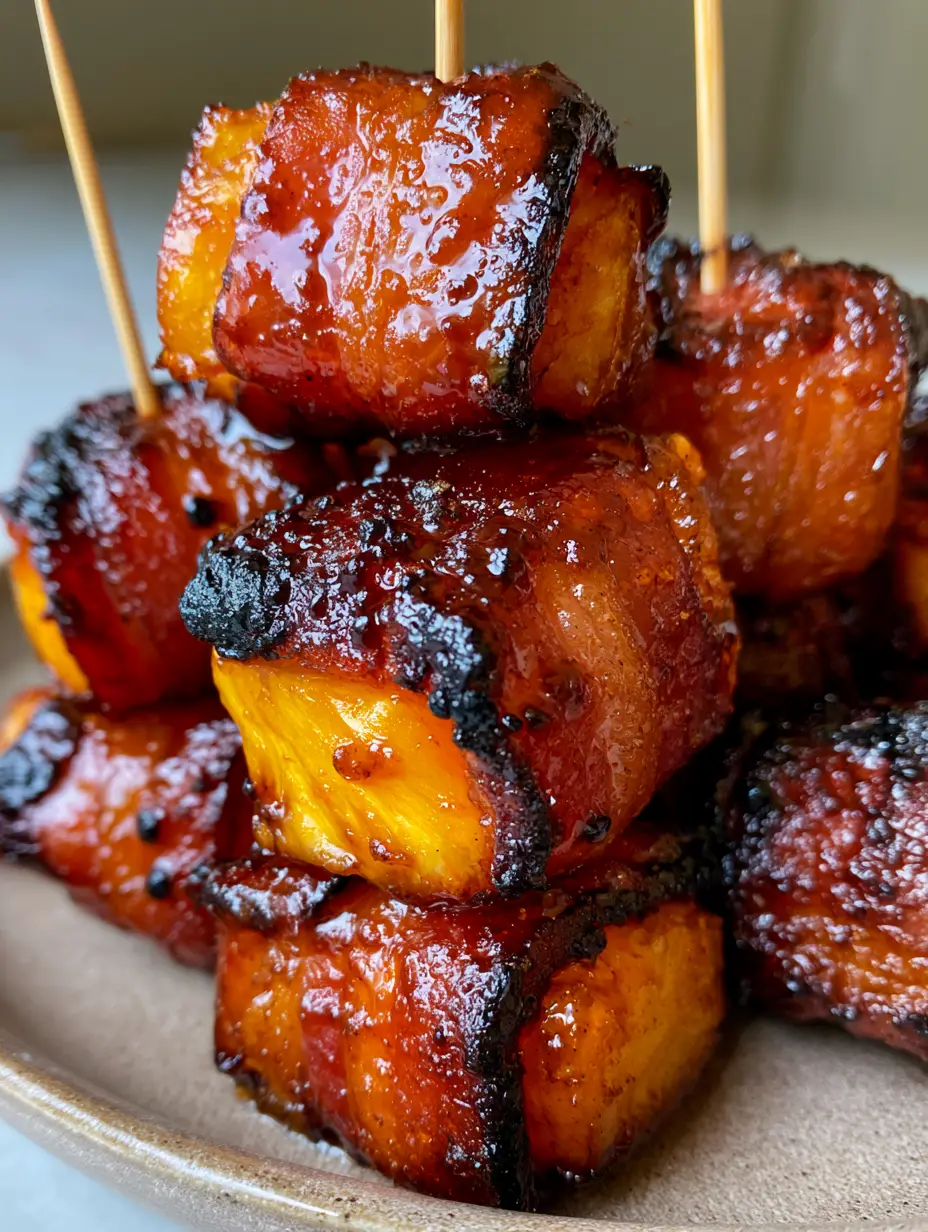
Bacon-Wrapped Pineapple Bites with a Sticky Mahogany Brown Sugar Glaze
Ingredients
Equipment
Method
- Wrap each 1-inch pineapple chunk with a third-slice of bacon and secure with a wooden toothpick. Ensure the toothpick pierces through the center.
- Place bites in the air fryer at 375°F (190°C) for 8-10 minutes until bacon starts to crisp at the edges and fat renders.
- Whisk glaze ingredients. Brush onto bites generously. Cook at 400°F (205°C) for 3-5 minutes until the glaze is mahogany and bubbling with tiny bubbles.
Notes
Pat the pineapple chunks very dry before wrapping to ensure the bacon gets crispy.
Closing & Call to Action
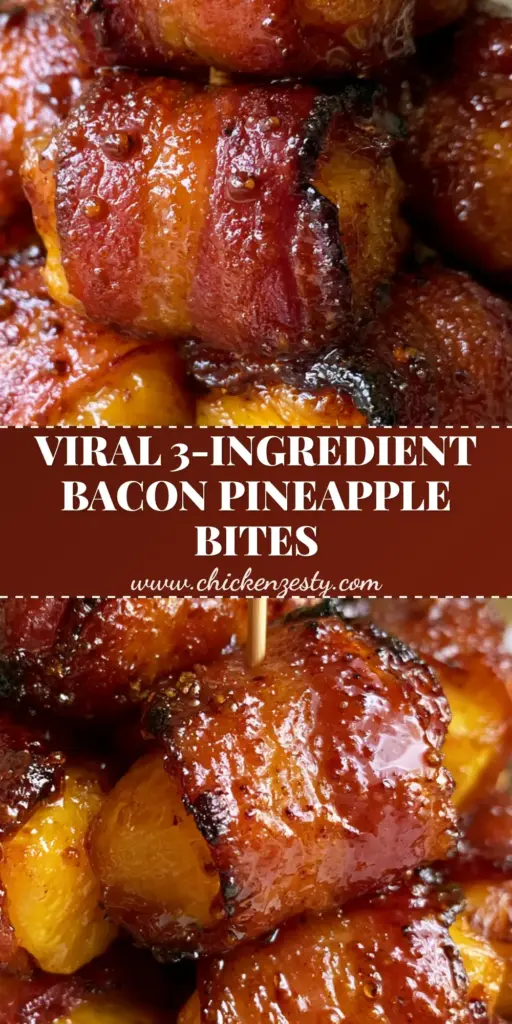
Mastering the bacon-wrapped pineapple bites is a rite of passage for any home cook who loves the interplay of sweet and savory. By focusing on the “rendered crispy” texture of the bacon and the “viscous mahogany” depth of the glaze, you create an appetizer that is as visually stunning as it is delicious. The “tiny bubbles” and “high-gloss sheen” are the hallmarks of a recipe made with precision and care.
If you enjoyed this deep dive into culinary forensics and recipe development, please leave a comment below with your results! Don’t forget to share your photos and follow us on Pinterest for more visually-driven recipe inspiration. Happy cooking!