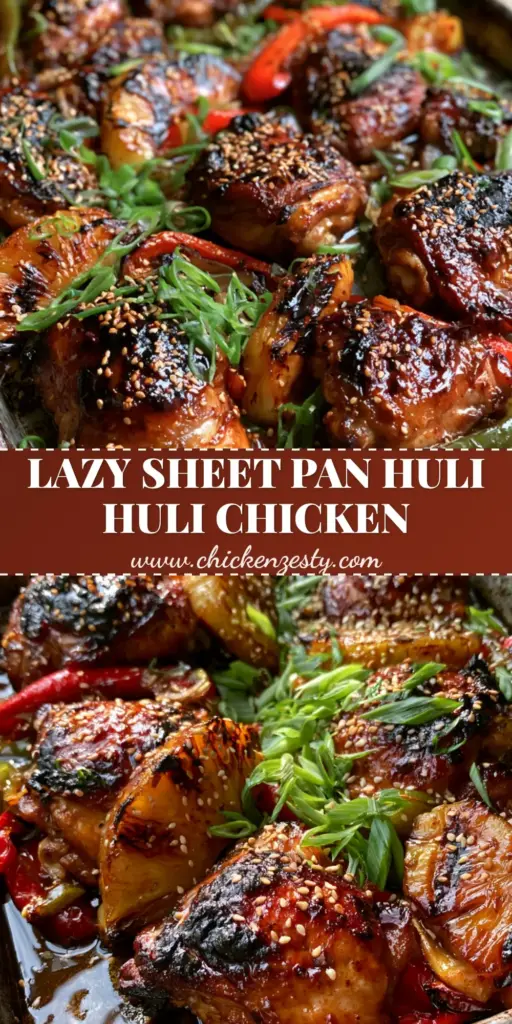
If you are craving the flavors of the islands, this huli huli chicken is about to become your new favorite weeknight obsession. Imagine succulent roasted chicken thighs coated in a bubbly mahogany glaze that catches the light like a mirror. Every bite is a perfect balance of smoky char, sweet brown sugar, and salty soy sauce, transporting your kitchen straight to a North Shore roadside stand.
This recipe isn’t just about the taste; it’s a visual masterpiece designed to stop the scroll. We are talking about caramelized pineapple rings with dark charred edges and blistered red and green bell pepper strips all roasted on a single dark metal sheet pan. It is the kind of vibrant, syrupy, and golden-brown dish that earns a permanent spot on your “Best Dinners” Pinterest board.
Whether you are a fan of a traditional Hawaiian huli huli chicken stack or looking for a way to upgrade your standard poultry routine, this sheet pan version delivers maximum flavor with minimal cleanup. The secret lies in the reduction of the sauce, which transforms from a thin marinade into a thick, sticky glaze that clings to the crispy chicken skin.
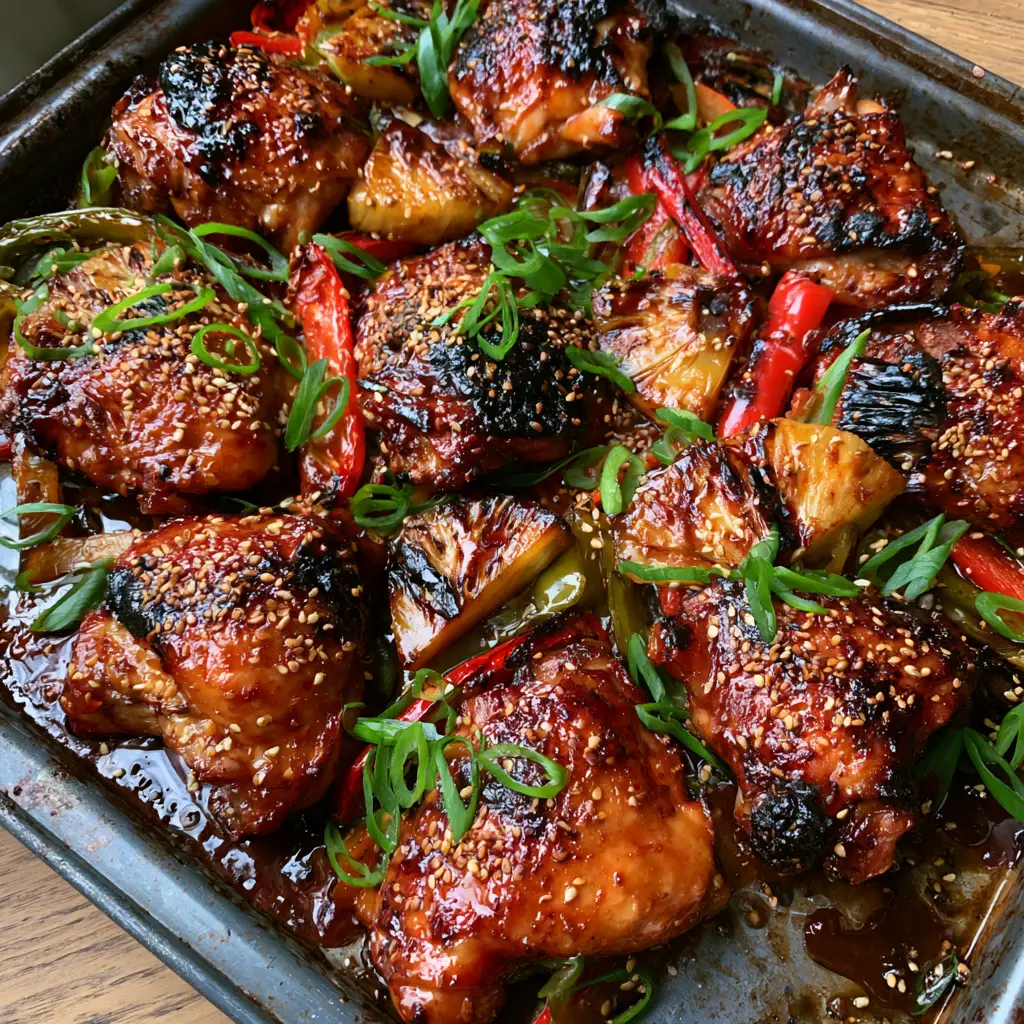
Why This Mahogany Glazed Chicken Is a Total Showstopper
- The Mirror-Like Finish: The combination of pineapple juice and brown sugar creates a high-shine glaze that looks professionally catered.
- Explosive Textures: You get the crunch of toasted white sesame seeds, the snap of blistered peppers, and the juicy burst of roasted pineapple.
- Effortless Cleanup: By using a weathered dark metal sheet pan, you achieve superior heat conduction for those charred bubbles while keeping the mess contained to one pan.
- Balanced Flavor Profile: The acidity of the pineapple cuts through the rich soy and ginger, much like the balance found in a great Teriyaki chicken with broccoli.
The Anatomy of a Perfect Huli Huli Sauce
To achieve that iconic Hawaiian flavor, every ingredient in the marinade serves a specific culinary purpose. We aren’t just making a sauce; we are building layers of umami and sweetness that caramelize under high heat.
Chicken Thighs (Bone-in, Skin-on): 3 lbs (1.36kg). The skin is essential for capturing those blackened char bubbles and holding onto the sticky glaze. Thighs remain juicy at high roasting temperatures where breasts would dry out.
Unsweetened Pineapple Juice: 1 cup (240ml). This provides the enzymatic action to tenderize the meat and the natural sugars for that bubbly mahogany glaze.
Soy Sauce: 1/2 cup (120ml). Provides the deep, savory saltiness that defines the “Huli” style. For a different twist on Asian-inspired poultry, you might also enjoy bang bang chicken thighs.
Dark Brown Sugar: 1/2 cup (100g). Essential for the sticky brown sugar soy glaze. The molasses in dark brown sugar adds a depth of color that light sugar simply can’t match.
Ketchup: 1/4 cup (60ml). It adds body to the sauce and a slight vinegary tang that helps the glaze set into a thick, syrupy consistency.
Fresh Ginger & Garlic: 1 tablespoon (6g) each, minced. Fresh aromatics provide a sharp, spicy bite that cuts through the sugar. Do not substitute with powders if you want that authentic island aroma.
Sesame Oil: 1 teaspoon (5ml). A tiny amount goes a long way in providing a toasted, nutty undertone that complements the toasted white sesame seeds used for garnish.
Essential Produce for the Sheet Pan
Fresh Pineapple: 1 medium pineapple, sliced into rings. Fresh is non-negotiable here. The rings need to be thick enough to withstand the heat until they develop those beautiful caramelized charred edges.
Bell Peppers: 1 large red and 1 large green, cut into wide strips. Roasting them until soft and slightly blistered adds a necessary earthy sweetness and a pop of bright color to the dark metal foundation.
Garnish: A generous scattering of thinly sliced bright green scallions and toasted white sesame seeds. These add the final layer of visual contrast against the mahogany chicken.
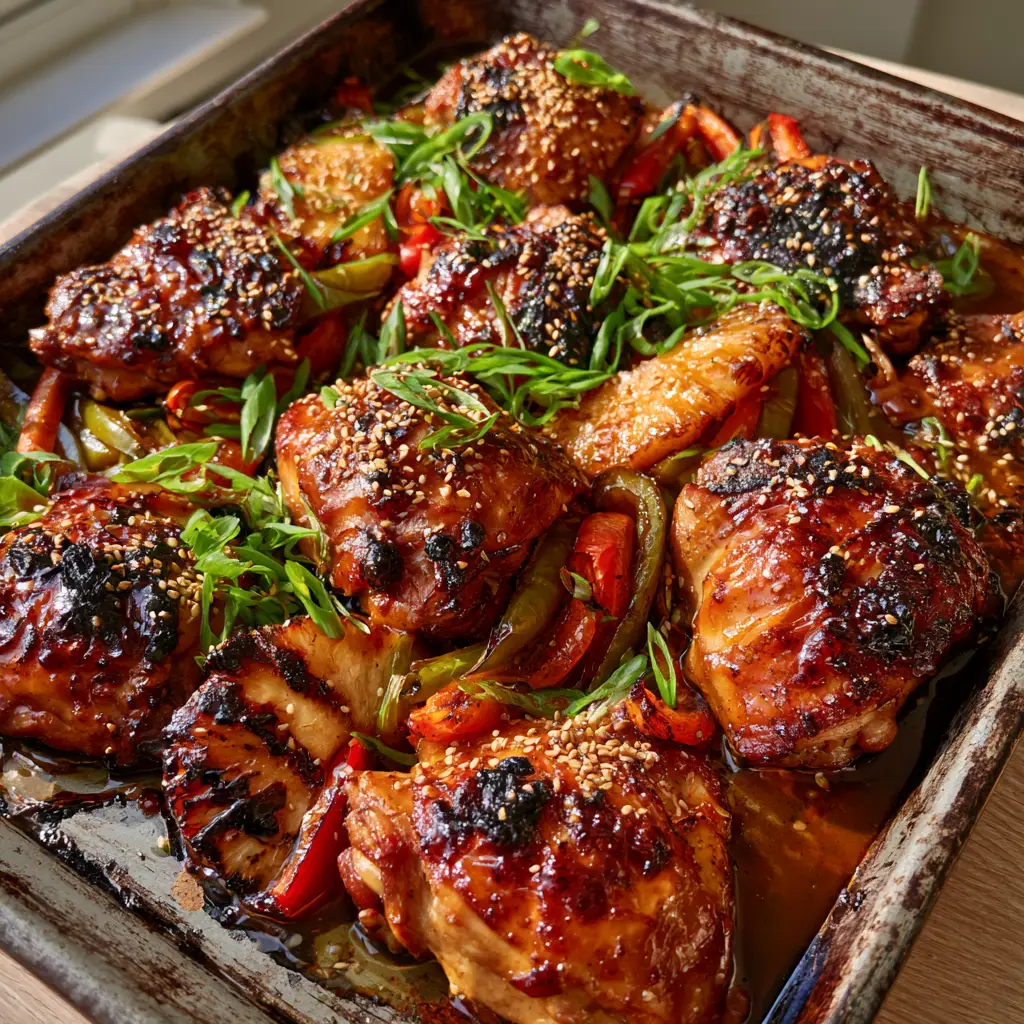
Step-by-Step Instructions for Roasted Perfection
1. The Marinade Infusion
In a large bowl, whisk together the pineapple juice, soy sauce, brown sugar, ketchup, ginger, garlic, and sesame oil. Reserve 1/2 cup (120ml) of this liquid—this is crucial for your final glaze. Place the chicken thighs in a zip-top bag with the remaining marinade and refrigerate for at least 4 hours, or ideally overnight.
2. Preheating for the Char
Preheat your oven to 425°F (220°C). If you have a convection setting, use it. The circulating air is what helps create those crispy, blackened char bubbles on the chicken skin that Pinterest users love to see.
3. Organizing the Sheet Pan
Arrange the marinated chicken thighs on a dark metal sheet pan. The dark surface absorbs more heat, ensuring the bottom of the chicken browns just as well as the top. Space them out to allow for airflow; crowding the pan will cause the chicken to steam rather than roast.
4. Adding the Vibrant Aromatics
Toss your red and green bell pepper strips and pineapple rings in a tiny bit of oil and salt. Nestle them in between the chicken pieces. As the chicken roasts, the fat will render out and mingle with the pineapple juices, creating a flavorful environment for the vegetables to soften and blister.
5. The First Roast
Slide the pan into the oven and roast for 25-30 minutes. You are looking for the chicken to reach an internal temperature of 160°F (71°C) at this stage. The peppers should be starting to wilt, and the pineapple should show the first signs of golden caramelization.
6. The Master Glaze Application
While the chicken roasts, take your reserved marinade and simmer it in a small saucepan over medium heat for 8-10 minutes. It should reduce by half until it is thick and syrupy. This is your “liquid gold.”
7. The Broil for Visual Brilliance
Remove the pan and brush a heavy layer of the reduced glaze over the chicken, pineapple, and peppers. Turn your broiler to high. Place the pan back in for 3-5 minutes. Watch closely! You want the sauce to start pooling in the corners and the chicken skin to erupt in mirror-like mahogany bubbles.
Expert Tips for Pinterest-Worthy Results
- Pat it Dry: Before the first roast, lightly pat the chicken skin (not the meat) with a paper towel even after marinating. This helps the fat render faster for a crispier texture.
- Use a Dark Pan: A weathered dark metal pan provides a rustic aesthetic and better heat absorption than a shiny new aluminum one.
- The Double Glaze: Don’t just glaze once. Brush a second layer of the sticky brown sugar soy glaze immediately after the pan comes out of the oven for that “wet” look.
- Fresh Garnish: Only add the scallions at the very last second. The heat of the pan will wilt them quickly, and you want that bright green pop for your photos.
Storage, Reheating, and Make-Ahead Tips
This huli huli chicken actually tastes better the next day as the flavors continue to meld. Store leftovers in an airtight container in the refrigerator for up to 4 days. To maintain the texture, reheat in a 350°F (175°C) oven or air fryer until the skin crisps back up.
You can easily prep the marinade and slice the peppers a day in advance. If you are a fan of meal prepping chicken, you might also like the ease of crockpot butter chicken or these shredded chicken enchiladas for your weekly rotation.
What to Serve With Your Hawaiian Feast
To keep it traditional, serve this chicken over a bed of fluffy white jasmine rice to soak up all that extra syrupy sauce. A side of creamy Hawaiian mac salad is the classic pairing, providing a cool contrast to the charred, smoky chicken.
If you want a lighter option, serve the blistered peppers and chicken inside large lettuce cups, similar to how you might serve a teriyaki chicken wrap recipe. For a fun fusion dinner party, try serving the leftovers as chicken wonton tacos.
Frequently Asked Questions
You can, but be careful! Breasts dry out quickly at 425°F. If using breasts, reduce the initial roasting time and ensure you use a meat thermometer to pull them at 165°F (74°C).
Fresh pineapple is highly recommended because it holds its structure better under the broiler and contains natural sugars that char beautifully. Canned pineapple is often too soft and may turn mushy.
The secret is reducing the reserved marinade on the stovetop until it reaches a syrupy consistency. Brushing this thick reduction onto the chicken during the final broil creates that mirror-like finish.
No, this is a sweet and savory dish. The ‘heat’ comes from fresh ginger, which provides a zing rather than spice. If you want heat, feel free to add a teaspoon of sriracha or red pepper flakes to the marinade.
In Hawaiian, ‘huli’ means ‘turn.’ Traditionally, the chicken was cooked on a spit and turned constantly. In this recipe, we replicate that all-over caramelization using a high-heat roast and a concentrated glaze reduction.
Get Cooking: The Ultimate Huli Huli Recipe
huli huli chicken: The Ultimate Sticky Hawaiian Sheet Pan Dinner
Ingredients
Equipment
Method
- Whisk pineapple juice, soy sauce, brown sugar, ketchup, ginger, and garlic. Reserve 1/2 cup for the glaze.
- Place chicken in a bag with the remaining marinade for 4-24 hours.
- Place chicken, pineapple rings, and pepper strips on a dark metal sheet pan.
- Roast at 425°F (220°C) for 25-30 minutes until the chicken skin starts to brown.
- Simmer the reserved 1/2 cup of marinade until it becomes a thick, syrupy glaze.
- Brush glaze over everything and broil for 3-5 minutes until skin has bubbly mahogany char marks.
Notes
Ensure you use fresh pineapple as canned will not char as beautifully.
Show Off Your Island Creations!
Did you get those perfect charred bubbles on your chicken? We want to see! Please save this recipe to your Favorite Dinners board on Pinterest so you never lose it. If you made this, leave a comment below and upload a photo of your sheet pan. Your feedback helps our community grow, and don’t forget to leave a 5-star rating if this huli huli chicken brought a little sunshine to your table!