There is an unmistakable aroma that fills the air at high-end holiday markets—a heady, intoxicating blend of toasted nuts, warm spice, and caramelized sugar. These cinnamon walnuts capture 그 exact sensory magic, delivering a snack that is as visually stunning as it is addictive.
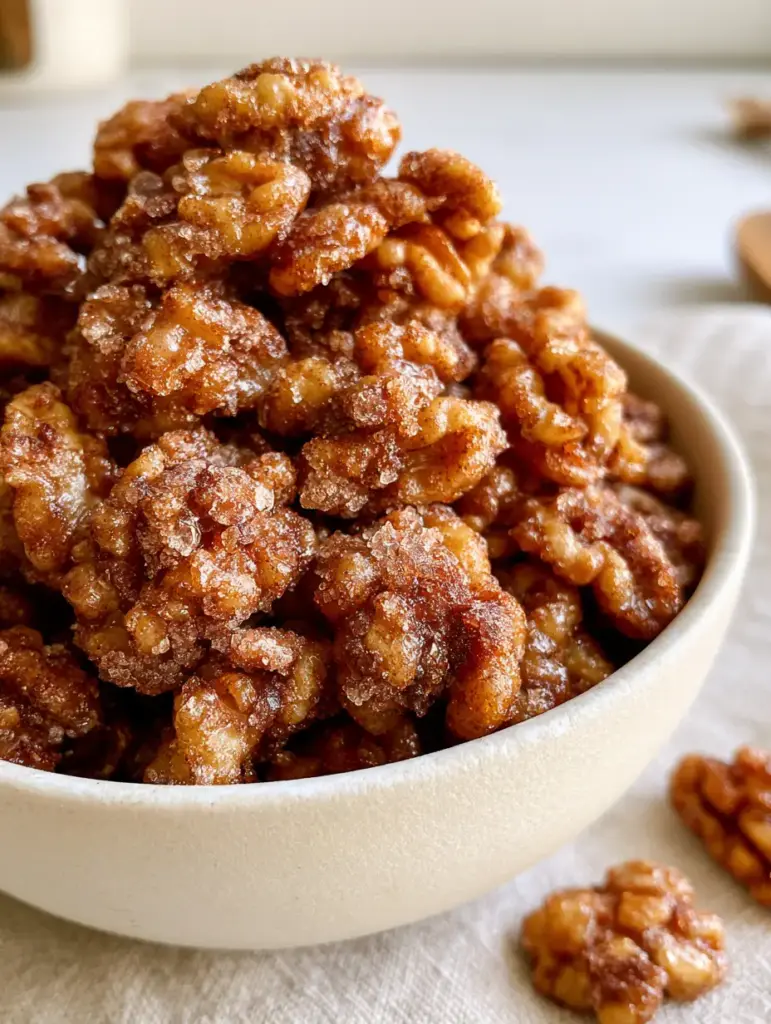
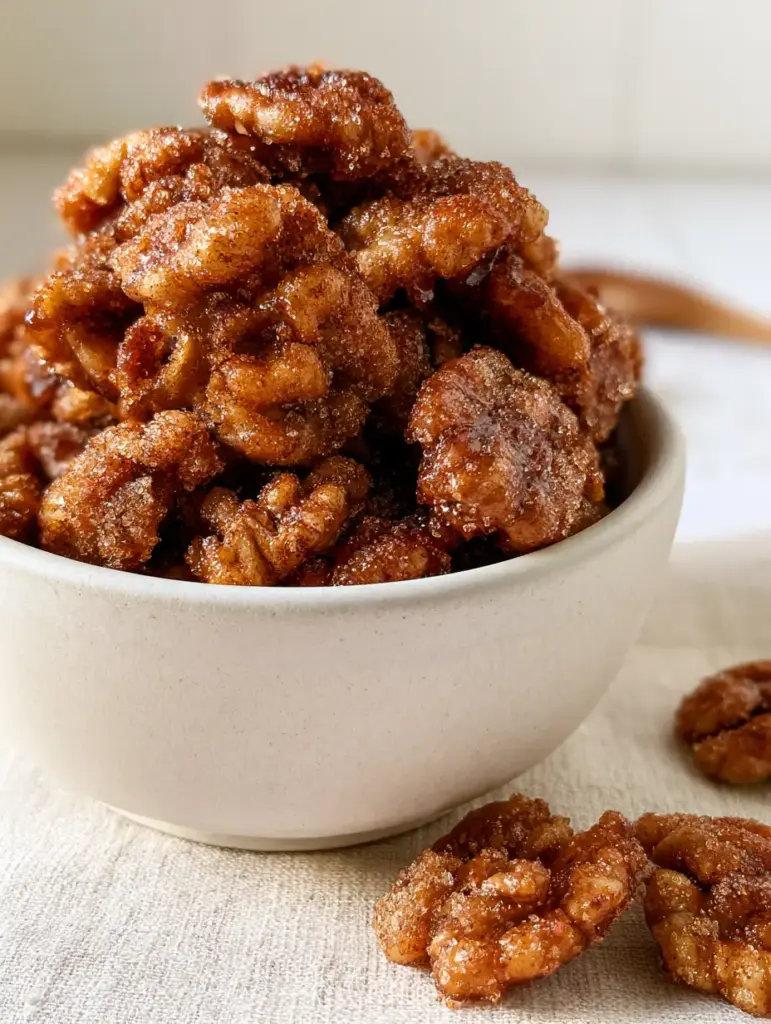
Imagine a generous heap of warm, toasted walnut halves, each encased in a thick, perfectly crystallized amber sugar shell. The coating isn’t just sweet; it features visible grains of ground cinnamon and a glistening honey glaze that catches the light beautifully.
Whether you are looking for a sophisticated addition to a charcuterie board or a simple, high-protein snack, these walnuts offer a professional-grade crunch. In this guide, we will break down the culinary science required to achieve that elusive translucent amber finish and the perfect granular texture shown in our photos.
Why This Cinnamon Walnuts Recipe Stands Out
- The Perfect Contrast: We combine a thick, crystallized granulated sugar coating with a glossy honey glaze for a dual-texture experience.
- Visual Precision: This recipe results in a translucent amber sugar shell that looks like it came from a professional confectionery.
- Deep Flavor Profile: By toasting the walnuts before glazing, we unlock the natural oils, providing a rich, savory backbone to the sweet exterior.
- Consistent Crunch: Our method ensures the nuts remain crispy for weeks, avoiding the dreaded stickiness common in many stovetop recipes.
Essential Ingredients for the Perfect Amber Shell
Creating the ultimate cinnamon walnuts requires more than just sugar and spice; it requires an understanding of how different sweeteners interact under heat.
Whole Walnut Halves: 2 cups (200g). Choose high-quality, fresh walnut halves to ensure the characteristic bumpy texture is highlighted by the sugar coating.
Granulated White Sugar: 1/2 cup (100g). This is the primary structural component that provides the “crystallized” look and the essential crunch.
Honey: 2 tbsp (42g). Honey adds a deep, golden translucence to the coating and prevents the sugar from becoming too brittle or “chalky.”
Ground Cinnamon: 1.5 tsp (4g). We use a generous amount to ensure visible grains of spice are embedded directly into the amber sugar shell.
Sea Salt: 1/2 tsp (3g). Salt is the “invisible” hero here, cutting through the intense sweetness and elevating the toasted notes of the nut.
Water: 2 tbsp (30ml). Water acts as the solvent, allowing the sugar and honey to melt into a uniform syrup before the crystallization process begins.
Unsalted Butter: 1 tbsp (14g). A small amount of fat adds a professional gloss to the finished walnut and helps separate the nuts as they cool.
The Professional Kitchen Tools You Will Need
To achieve the high-end look of these cinnamon walnuts, equipment choice is paramount. A heavy-bottomed stainless steel or cast-iron skillet is non-negotiable for even heat distribution.
Thin pans often create “hot spots” that burn the sugar before the honey can properly glaze the nuts. You will also need a silicone spatula, which is heat-resistant and prevents the sugar from sticking to the tool during the critical stirring phase.
Finally, a large sheet of parchment paper or a silicone baking mat is essential. This allows you to spread the walnuts in a single layer immediately after cooking, ensuring they don’t clump into a giant mass.
Mastering the Stovetop: Step-by-Step Culinary Instructions
Phase 1: Toasting for Maximum Fragrance
Place your raw walnut halves in a cold skillet and turn the heat to medium. Stir frequently for 3-5 minutes, or until you begin to smell a rich, nutty aroma and see the skins darken slightly.
Toasting the nuts first is a critical step for these cinnamon walnuts. It removes residual moisture, ensuring the center of the nut stays crunchy even after the glaze is applied.
Phase 2: Developing the Amber Honey Syrup
Push the toasted walnuts to the edges of the pan and add the water, granulated sugar, honey, and cinnamon to the center. Use your spatula to whisk the liquid components together into a bubbling slurry.
Watch for the bubbles; they will transition from small and clear to larger, slower-popping bubbles as the water evaporates. This is the “soft ball” stage, where the sugar and honey begin to fuse into a thick glaze.
Phase 3: The Crystallization Toss
Fold the walnuts into the center of the syrup, coating every crevice. Continue to stir constantly over medium heat. You will notice a strange thing happen: the glossy syrup will suddenly turn sandy and opaque.
This is exactly what we want. This crystallization creates the “thick granulated coating” described in our visual blueprint. Keep the heat active for another 60 seconds to allow some of that sandiness to re-melt slightly into an amber glaze.
Phase 4: The Final Gloss and Cooling
Add the butter and the sea salt in the final 30 seconds. The butter will melt and coat the crystallized sugar, giving the cinnamon walnuts their signature “glossy” and “glistening” finish.
Immediately pour the walnuts onto your parchment paper. Use two forks to quickly separate any nuts that are stuck together. As they cool, the sugar will harden into a translucent amber shell that is satisfyingly brittle.
Expert Tips for Confectionery Success
- Control the Humidity: Sugar is hygroscopic, meaning it absorbs moisture from the air. For the best cinnamon walnuts, make these on a dry day to prevent stickiness.
- The “Sizzle” Cue: If the sugar starts to smoke, your pan is too hot. Immediately lift the pan off the heat while continuing to stir to stabilize the temperature.
- Freshness Check: Walnuts contain high levels of oil and can go rancid. Always taste a raw nut before starting; if it tastes bitter or soapy, the oils have oxidized.
- Avoid Over-Stirring at the End: Once the butter is added, stir just enough to coat. Over-working the nuts at this stage can knock the crystallized sugar off the surface.
The Best Way to Store Your Gourmet Snacks
Once your cinnamon walnuts have cooled completely—usually about 30 minutes—transfer them to an airtight glass jar. They will stay perfectly crisp at room temperature for up to two weeks.
For longer storage, you can freeze these nuts in a vacuum-sealed bag for up to three months. When you are ready to serve, let them thaw at room temperature; do not microwave them, as this will melt the delicate sugar shell.
What to Serve with These Candied Treats
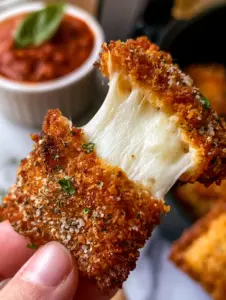
These walnuts are incredibly versatile. They add a sophisticated crunch to a platter of parmesan mozzarella bites or provide a sweet contrast to savory garlic snacks.
If you are building a dessert table, try pairing them with apple pie cupcakes for a cohesive autumn theme. They also make a fantastic addition to a bespoke maple bacon snack mix for your next gathering.
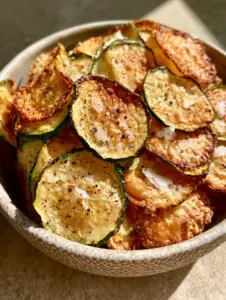
For a lighter option, scatter a few over a fresh salad or serve them alongside some oven baked cucumber chips to satisfy both sweet and salty cravings.
Frequently Asked Questions
Yes, you can substitute maple syrup 1:1 for honey. It will provide a slightly different flavor profile and a darker amber color, though the final glaze may be slightly less glossy than the honey version.
While not strictly mandatory, toasting is highly recommended. It develops the flavor of the nut and ensures the center stays crunchy rather than soft once the sugar coating is applied.
The ‘sandy’ look happens through a process called sugar recrystallization. By stirring the nuts constantly as the water evaporates from the syrup, you force the sugar to move from a liquid state back into a solid, granular state.
Stickiness usually occurs if the sugar didn’t reach a high enough temperature or if there is too much humidity in the air. Ensuring you cook the syrup until the ‘sandy’ stage and then adding a touch of butter helps create a dry, crisp shell.
Bitterness in walnuts is often due to the tannins in the skins. Toasting them helps mellow this out, but ensure your walnuts are fresh, as the oils in walnuts can turn rancid and bitter over time.
The Signature Cinnamon Walnuts Recipe
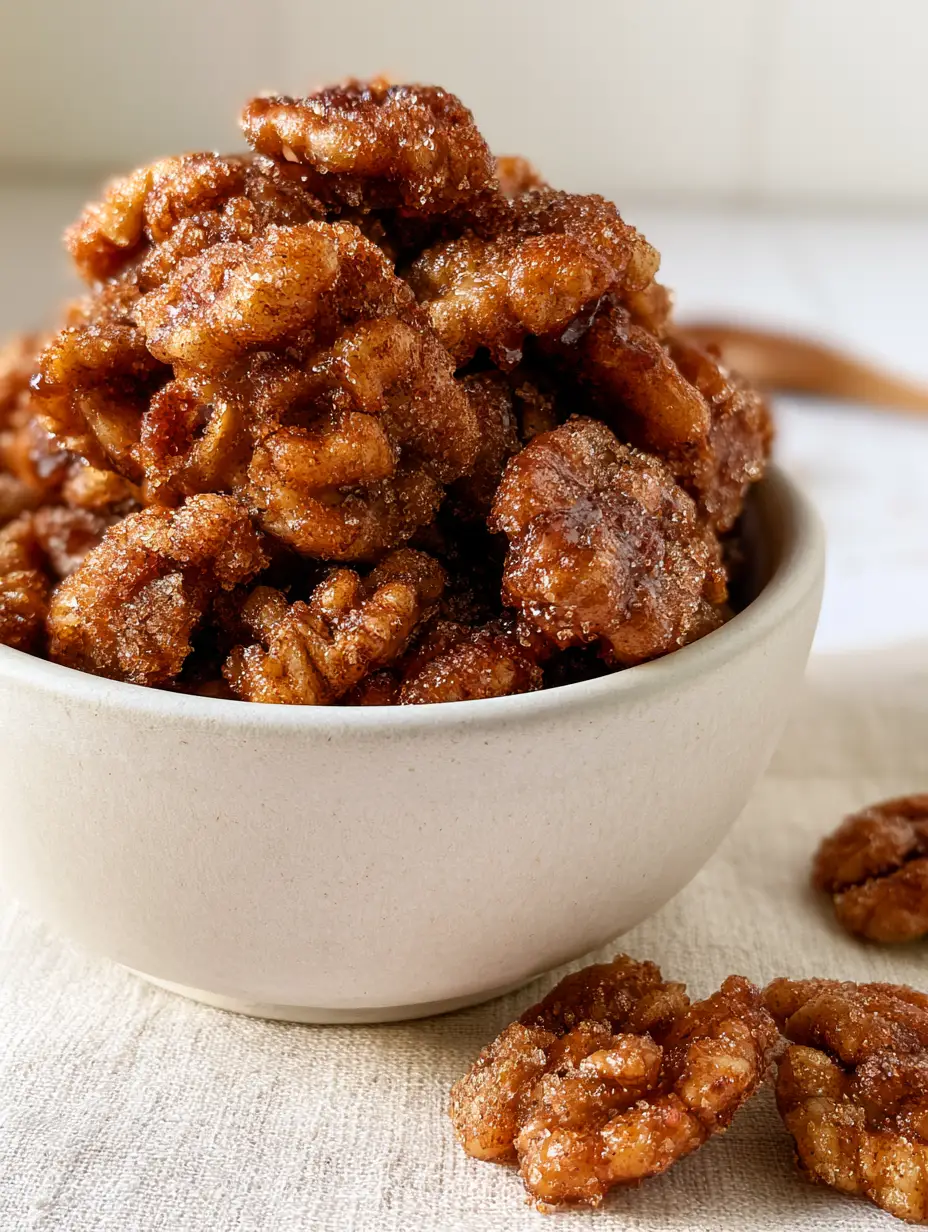
Cinnamon Walnuts: The Ultimate Crispy Candied Recipe with an Amber Glaze
Ingredients
Equipment
Method
- Place walnuts in a skillet over medium heat, stirring for 3-5 minutes until fragrant and toasted.
- Add water, sugar, honey, and cinnamon to the center of the pan. Whisk until it becomes a bubbling, thick syrup.
- Fold the walnuts into the syrup. Stir constantly until the glaze turns sandy and crystallizes around the nuts.
- Add butter and salt, stirring until a glossy amber shell forms. Pour onto parchment paper and separate with forks to cool.
Notes
Ensure the nuts are completely cool before storing in an airtight jar to maintain crunch.
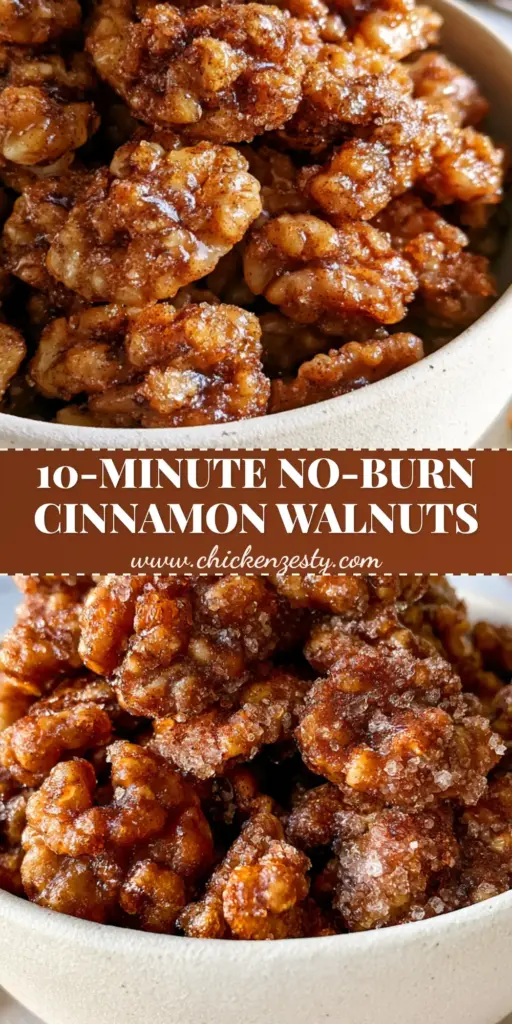
Sharing the Joy of Gourmet Nut Crafting
Creating these cinnamon walnuts is a rewarding culinary project that transforms humble pantry staples into a high-end delicacy. The combination of the warm spice, the salt, and the complex sweetness of honey creates a profile that is far superior to store-bought versions.
We invite you to try this recipe and share your results! Did you achieve that perfect amber glow? Let us know in the comments below. For more snack inspiration and gourmet tips, be sure to follow us on Pinterest and save this recipe to your favorite board.