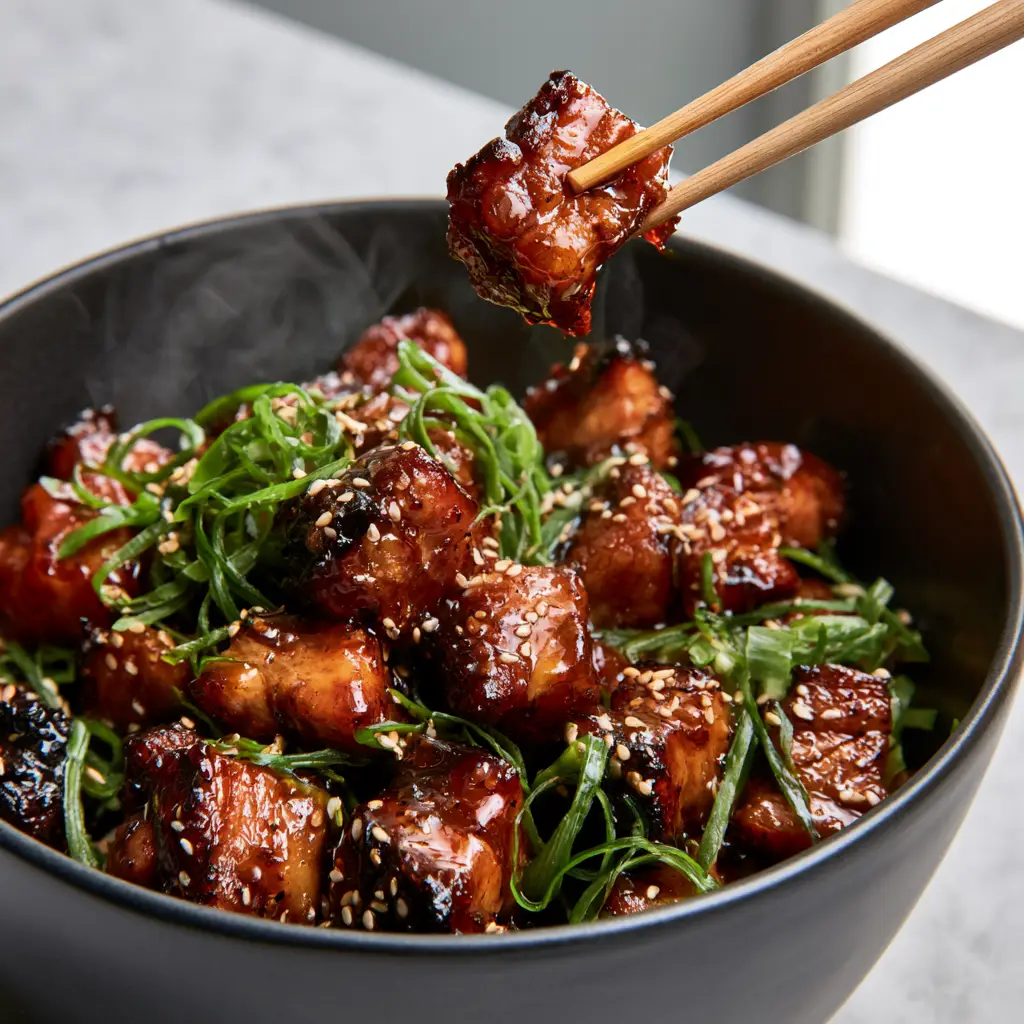
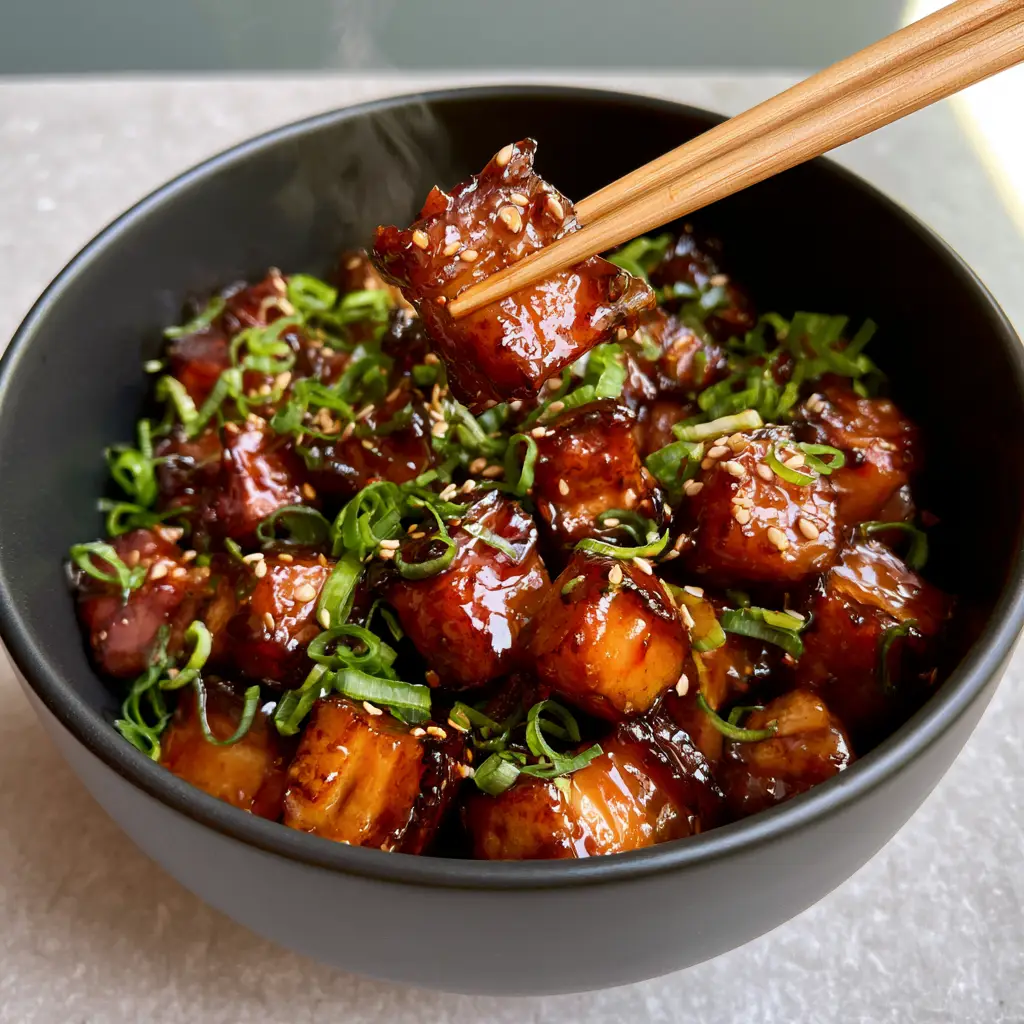
When it comes to comfort food that satisfies every single taste bud, nothing competes with this Chinese style pork. Imagine bite-sized, tender cubes of pork shoulder, deeply seared until the edges are crisp and golden, then tossed in a mahogany-colored, translucent glaze that shimmers under the light. This isn’t just a meal; it’s a sensory experience that brings the bold flavors of a high-end bistro right into your own kitchen.
The beauty of this Chinese style pork lies in the contrast of textures. You get that initial crunch from the caramelized exterior, followed by a succulent, melt-in-your-mouth interior. Garnished with bright green scallion curls and toasted white sesame seeds, it’s a dish that looks just as good as it tastes—perfect for your next dinner party dish.
Why This Caramelized Pork Is a Total Game Changer
- The Mahogany Glaze: A thick, glossy, soy-ginger reduction that coats every nook and cranny of the meat.
- Perfect Sear: We use high-heat techniques to ensure the pork cubes have those coveted caramelized edges.
- Flavor Balance: A sophisticated mix of salty soy, spicy ginger, and sweet honey, finished with a pinch of red chili flakes.
- Visual Appeal: Topped with elegant scallion curls and sesame seeds for a professional, “Pinterest-worthy” finish.
The Secret Ingredients for Perfect Chinese Style Pork
To achieve that authentic restaurant-quality finish, every ingredient serves a specific culinary purpose. Here is what you need to gather for your Chinese style pork:
Pork Shoulder (Pork Butt): 2 lbs (900g). This cut is essential because the marbled fat breaks down during the sear, ensuring the meat remains juicy and tender rather than drying out.
Soy Sauce: 1/2 cup (120ml). Provides the salty, umami base and contributes to the deep mahogany color of the glaze.
Fresh Ginger: 2 tbsp (30g), minced. Ginger adds a sharp, peppery bite that cuts through the richness of the pork fat.
Honey or Brown Sugar: 1/3 cup (80ml). This is the key to caramelization. It creates that sticky, translucent coating that reflects light beautifully.
Garlic: 4 cloves, smashed and minced. Essential for a savory aromatic backbone that lingers on the palate.
Rice Vinegar: 2 tbsp (30ml). A splash of acidity balances the sweetness and brightens the overall flavor profile.
Toasted Sesame Oil: 1 tbsp (15ml). Added at the end to provide a nutty, aromatic finish that ties the dish together.
Cornstarch: 1 tsp (5g). Used to create a tiny bit of “body” in the sauce, ensuring it clings to the meat instead of pooling at the bottom of the bowl.
Garnish: Fresh scallions (curled in ice water), toasted white sesame seeds, and a pinch of red chili flakes for a subtle heat kick.
How to Master the Perfect Sear and Glaze
Step 1: Preparing the Pork Cubes
Start by patting your pork shoulder completely dry with paper towels. This is a critical step; moisture is the enemy of a good sear. Cut the pork into uniform 1-inch (2.5cm) cubes.
Season the cubes lightly with salt and pepper. Remember, the glaze is savory, so don’t overdo the salt at this stage. If you love these flavors, you might also enjoy our honey garlic ground beef rice bowl for a quicker weeknight alternative.
Step 2: Achieving the Golden Sear
Heat a heavy-bottomed skillet or wok over medium-high heat with 2 tbsp (30ml) of high-smoke-point oil (like avocado or canola oil). Once the oil is shimmering, add the pork in a single layer.
Do not crowd the pan. Work in batches if necessary. Let the pork sit undisturbed for 3-4 minutes until a deep, dark brown crust forms. Flip and repeat. You want those “caramelized edges” mentioned in the visual blueprint.
Step 3: Building the Soy-Ginger Reduction
Lower the heat to medium. Add the minced ginger and garlic to the pan, stirring constantly for 60 seconds until fragrant. Pour in the soy sauce, honey, and rice vinegar.
As the liquid bubbles, use a wooden spoon to scrape the bottom of the pan. Those little brown bits (the fond) are flavor gold! If you prefer a hands-off approach to pork, check out our slow cooker teriyaki pork recipe.
Step 4: The Glazing Transformation
Whisk the cornstarch with a tablespoon of water to create a slurry and stir it into the pan. Increase the heat slightly. Watch as the thin liquid transforms into a thick, mahogany-colored glossy glaze.
Toss the pork cubes continuously to ensure every side is coated. The sauce should be sticky enough that it leaves a trail when you move your spoon through it. This is the hallmark of high-quality Chinese style pork.
Expert Tips for Success
- The Scallion Trick: Slice the scallions very thinly on a sharp bias and drop them into a bowl of ice water. They will curl up into beautiful ribbons in about 5 minutes.
- Don’t Skip the Fat: While you can use pork loin, the shoulder provides the fat necessary for that succulent texture. If you have extra loin, try our bacon brown sugar pork tenderloin instead.
- Wok Hey: If you have a gas stove, use a carbon steel wok. The high heat adds a subtle smoky flavor known as “breath of the wok.”
- Toast Your Seeds: Always use toasted sesame seeds. If yours are raw, toss them in a dry pan for 2 minutes until they smell nutty and turn pale gold.
What to Serve With Chinese Style Pork
To balance the richness of this dish, serve it over a bed of fluffy jasmine rice or cauliflower rice. The rice acts as a sponge for any extra mahogany glaze. A side of charred bok choy or steamed broccoli adds a necessary crunch and vibrant color to the plate.
If you’re planning a full spread, this pairs beautifully with our huli huli chicken for a fusion-style feast that will impress any guest.
Storage and Reheating Instructions
To Store: Place leftovers in an airtight container and refrigerate for up to 4 days. The glaze will thicken in the fridge, but it will loosen up beautifully once reheated.
To Reheat: Use a skillet over medium-low heat with a splash of water or chicken broth to bring the sauce back to its glossy state. Avoid the microwave if possible, as it can make the pork rubbery.
To Freeze: This dish freezes well for up to 3 months. Thaw overnight in the refrigerator before reheating.
Frequently Asked Questions
Yes! While the recipe calls for a pinch of red chili flakes, you can increase the heat by adding Szechuan peppercorns or a tablespoon of chili garlic sauce to the glaze while it’s reducing.
The mahogany color comes from the reduction of soy sauce and honey. The ‘shine’ or glossiness is achieved by adding a small cornstarch slurry at the end, which thickens the sauce without making it cloudy.
To make this recipe gluten-free, simply swap the traditional soy sauce for Tamari or liquid aminos, and ensure your cornstarch is certified gluten-free.
Pork shoulder (also known as pork butt) is the best choice. Its higher fat content and marbling ensure the meat remains juicy during the high-heat searing process, unlike leaner cuts like tenderloin.
Tough pork is usually the result of overcooking or using a cut that is too lean. Ensure you use pork shoulder and only sear it long enough to develop a crust before finishing it in the sauce.
The Best Chinese Style Pork Recipe
Chinese Style Pork: The Ultimate Sticky Caramelized Glaze Recipe
Ingredients
Equipment
Method
- Pat the pork cubes dry and sear in a hot skillet with oil until all sides are deeply browned and caramelized.
- Add ginger and garlic, sautéing for 1 minute until the aroma fills the kitchen.
- Pour in soy sauce, honey, and vinegar. Stir in the cornstarch slurry and simmer until the sauce is thick, mahogany, and glossy.
- Toss to coat and serve immediately topped with scallion curls, sesame seeds, and chili flakes.
Notes
Use ice water to get the scallions to curl perfectly.
Save This Recipe to Pinterest!
Don’t lose this recipe! Pin this Chinese style pork to your favorite “Dinner Ideas” or “Asian Recipes” board so you can find it whenever the craving hits. Following @savory_vale on Pinterest helps us bring you more viral-worthy recipes every week!
If you make this dish, please leave a 5-star rating in the recipe card above and snap a photo! Share your results in the comments below—we love seeing those mahogany glazes in the wild.