Homemade french toast is the undisputed champion of the breakfast table, a nostalgic classic that transforms simple ingredients into a gourmet masterpiece. There is something deeply comforting about the aroma of cinnamon and vanilla wafting through the kitchen on a slow Sunday morning. If you have been searching for that restaurant-quality experience—where the bread is impossibly thick and the crust is perfectly caramelized—you are in the right place.
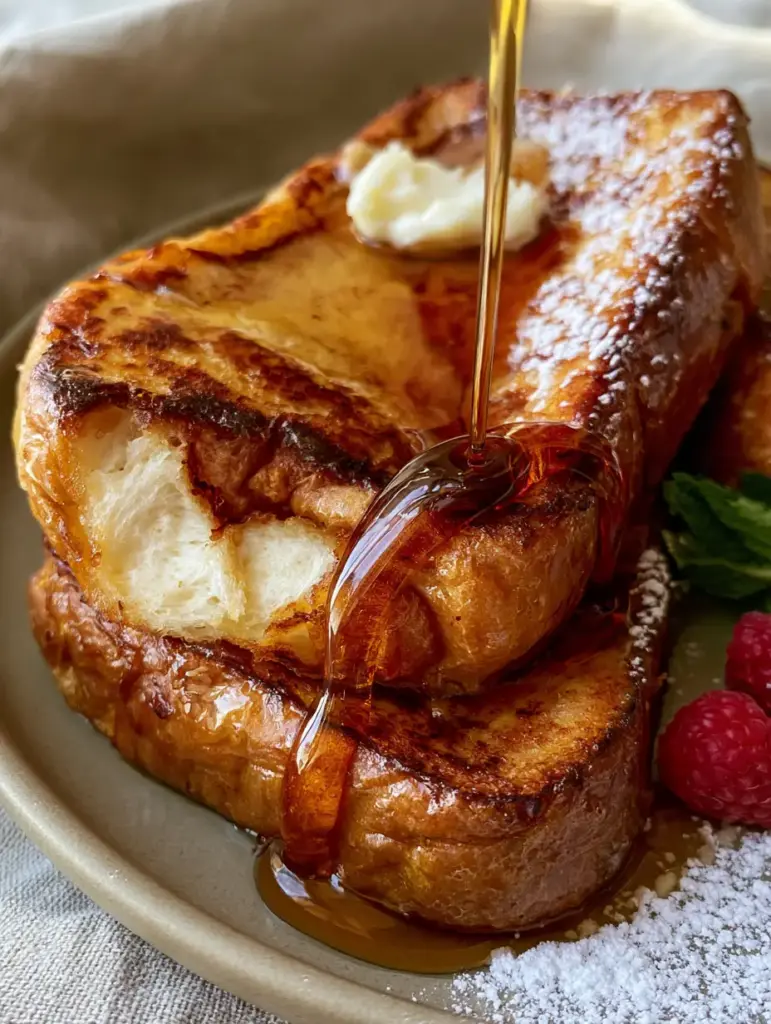
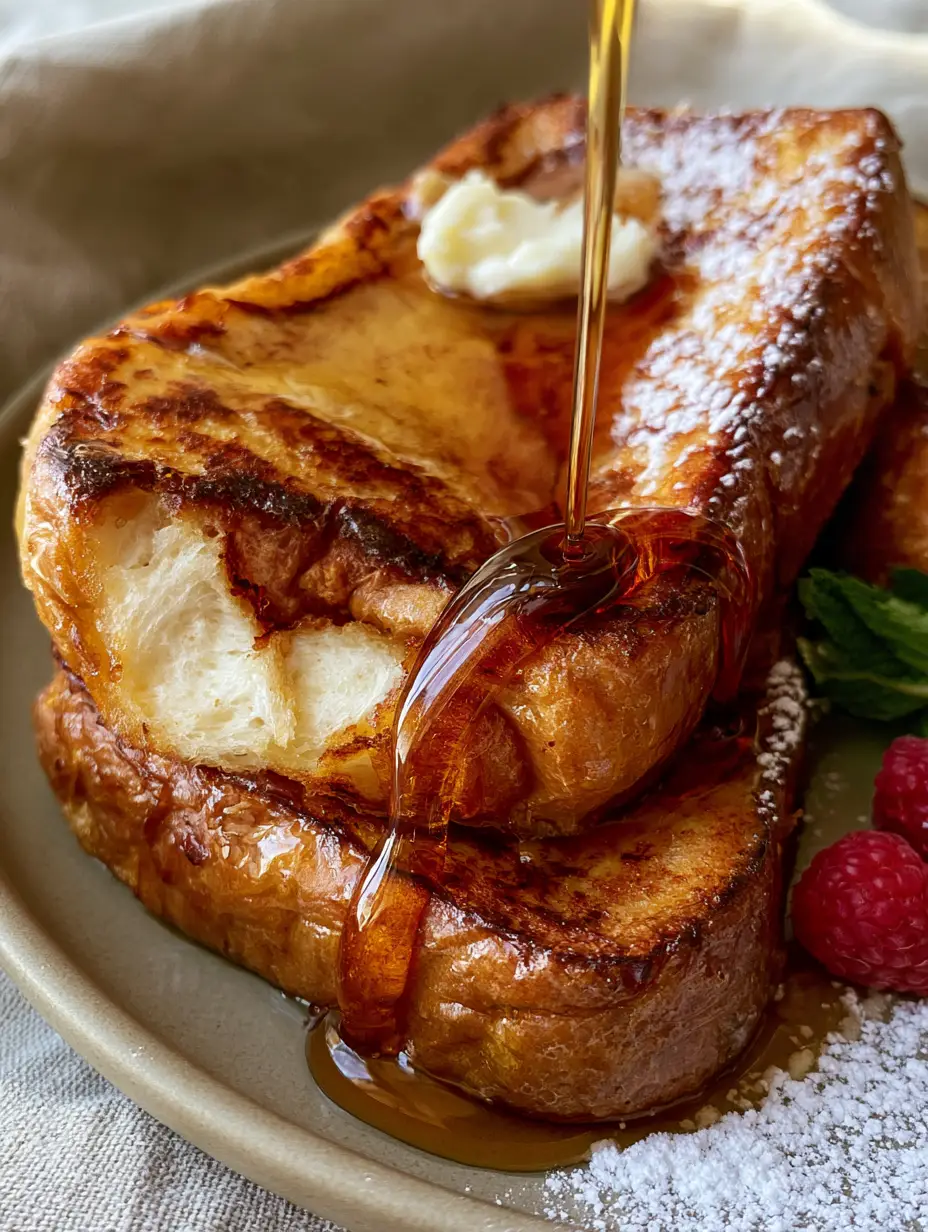
This recipe for homemade french toast isn’t just about dipping bread in eggs; it is a masterclass in texture. We are talking about two-inch thick-cut brioche bread with a deeply amber, caramelized golden-brown exterior and a soft, fluffy white interior crumb that melts in your mouth. Whether you are prepping for a special occasion or just treating yourself, this method ensures a plate-licking result every single time.

Why This Homemade French Toast Recipe Wins Every Time
- Ultra-Thick Slices: We use 2-inch thick-cut brioche to ensure a custard-like center that never turns soggy.
- Superior Caramelization: A specific blend of butter and sugar creates a crispy amber crust with deep highlights.
- Perfect Custard Ratio: The balance of heavy cream and whole eggs ensures a rich, velvety crumb.
- High-End Presentation: With fresh raspberries, mint, and a thick maple drizzle, it looks like it belongs in a five-star bistro.
If you enjoy these bright fruit flavors, you might also love our peach and raspberry cobbler for a sweet evening treat. For those looking for a lighter option during the week, our healthy french toast is a fantastic alternative.
Essential Ingredients for the Perfect Custard
To achieve the best homemade french toast, quality ingredients are non-negotiable. Every component plays a role in the final texture and flavor profile.
The Bread: 1 loaf of Brioche. You must slice this yourself into 2-inch (5cm) thick slabs. Brioche is high in egg and butter content, making it the best vessel for custard absorption without falling apart.
The Liquid Base: 1 cup (240ml) heavy cream and 1/2 cup (120ml) whole milk. This combination provides the necessary fat content for a rich, creamy interior.
The Eggs: 4 large eggs. These act as the binder, giving the homemade french toast its structure and that classic “eggy” breakfast flavor.
Aromatics: 2 teaspoons (10ml) pure vanilla extract and 1 teaspoon (2.6g) ground cinnamon. These provide the signature scent that makes this dish irresistible.
The Sweetener: 2 tablespoons (25g) granulated sugar. This helps the exterior undergo the Maillard reaction, leading to that golden-brown crust.
The Finishing Touches: Salted butter for the pan, a pat of salted butter for the top, 1/4 cup (60ml) dark maple syrup, 3 fresh raspberries, and 1 small mint sprig per serving.
The Science of the Soak: Preparing the Brioche
Slicing for Success
Do not use pre-sliced sandwich bread. For homemade french toast, you need structural integrity. Use a serrated knife to cut your brioche into 2-inch thick slices. This thickness allows the outside to sear while the inside stays airy and light.
Whisking the Custard
In a wide, shallow bowl, whisk together your eggs, heavy cream, milk, sugar, vanilla, and cinnamon. Boldly whisk until no streaks of egg white remain. A uniform custard ensures an even cook and prevents “fried egg” patches on your bread.
Mastering the Sear and Caramelization
The Quick Dip
Place a slice of brioche into the custard. Let it sit for 20-30 seconds per side. Because we are using thick-cut brioche, it can handle a longer soak than thin bread, but don’t let it become a sponge. It should feel heavy but still hold its shape.
The Sizzle and Flip
Heat a non-stick skillet or griddle over medium-low heat. Add a generous knob of salted butter. Once the butter bubbles, place the soaked bread down. Do not move it. Let it cook for 3-4 minutes until a deep amber crust forms. Flip and repeat.
The Secret Oven Finish
For 2-inch thick homemade french toast, the stovetop often browns the outside before the inside is fully set. Transfer the seared slices to a wire rack on a baking sheet and pop them into a 350°F (175°C) oven for 5 minutes. This creates the perfect fluffy white crumb.
This technique is a staple for our sunday family dinner ideas when we decide to do “breakfast for dinner,” which is always a crowd-pleaser.
Expert Tips for Visual Perfection
- Use Stale Bread: If your brioche is fresh, lightly toast the slices in a low oven for 10 minutes to dry them out. Dry bread absorbs custard better.
- Low and Slow: High heat will burn the sugar in the custard before the middle is cooked. Keep the heat at medium-low.
- Clean the Pan: Wipe your skillet between batches to prevent burnt butter bits from sticking to your fresh slices.
- Salt Your Butter: The contrast of a melted salted butter pat against the sweet maple syrup is the secret to professional-tasting homemade french toast.
If you are planning a full brunch spread, consider adding some savory balance with our zucchini tots or perhaps a sweet finish like the key lime pie mason jars for guests to take home.
Storage, Reheating, and Freezing
Storage: Keep leftover homemade french toast in an airtight container in the refrigerator for up to 3 days.
Freezing: Flash freeze individual slices on a parchment-lined tray before transferring to a freezer bag. They stay fresh for up to 2 months.
Reheating: Avoid the microwave, as it makes the bread rubbery. Reheat in a 350°F (175°C) oven or a toaster oven until the exterior crisps back up.
What to Serve With Your French Toast
To round out this decadent meal, serve with high-protein sides like crispy bacon or these breakfast protein biscuits. A hot cup of coffee or a fresh mimosa provides the perfect acidic balance to the rich, buttery brioche.
Frequently Asked Questions
You can, but using heavy cream adds a rich, velvety texture to the custard that mimics restaurant-style French toast. If using only milk, add an extra egg yolk for richness.
Use thick-cut bread and finish the slices in the oven at 350°F (175°C) for 5 minutes after searing. This ensures the center sets without burning the exterior.
Stale bread is better as it is drier and can absorb more custard. If your bread is fresh, lightly toast it in the oven for 10 minutes before soaking.
Brioche is the gold standard because its high egg and butter content allows it to absorb custard without becoming soggy, especially when cut into 2-inch thick slices.
The Ultimate Homemade French Toast Recipe Card
Homemade French Toast: The Ultimate Thick-Cut Brioche Guide
Ingredients
Equipment
Method
- Slice the brioche into 2-inch thick pieces. In a shallow dish, whisk eggs, heavy cream, milk, sugar, vanilla, and cinnamon until smooth.
- Place each slice in the custard for 20-30 seconds per side. It should be saturated but not falling apart.
- Melt butter in a skillet over medium-low heat. Sear slices for 3-4 minutes per side until a deep amber caramelized crust forms.
- Transfer slices to a wire rack on a baking tray. Bake at 350°F (175°C) for 5 minutes to ensure the fluffy white interior is cooked through.
- Top with a pat of salted butter, a viscous stream of dark maple syrup, a dusting of powdered sugar, fresh raspberries, and a mint sprig.
Notes
Don't crowd the pan; cook in batches to maintain even heat.

Share Your Breakfast Masterpiece!
Did you achieve that perfect caramelized golden-brown exterior? We want to see it! Save this recipe to your “Breakfast Goals” board on Pinterest and follow savory_vale for more kitchen inspiration. If you made this homemade french toast, please leave a 5-star rating and drop a photo of your creation in the comments below. Your feedback helps our community of home cooks grow!