There is nothing quite as visually arresting as a bubbling, deep crimson shakshuka recipe hitting the center of the table. This North African and Middle Eastern staple has captured the hearts of home cooks globally, not just for its vibrant colors, but for the comforting, soul-warming flavors of slow-simmered vegetables and rich, jammy yolks.
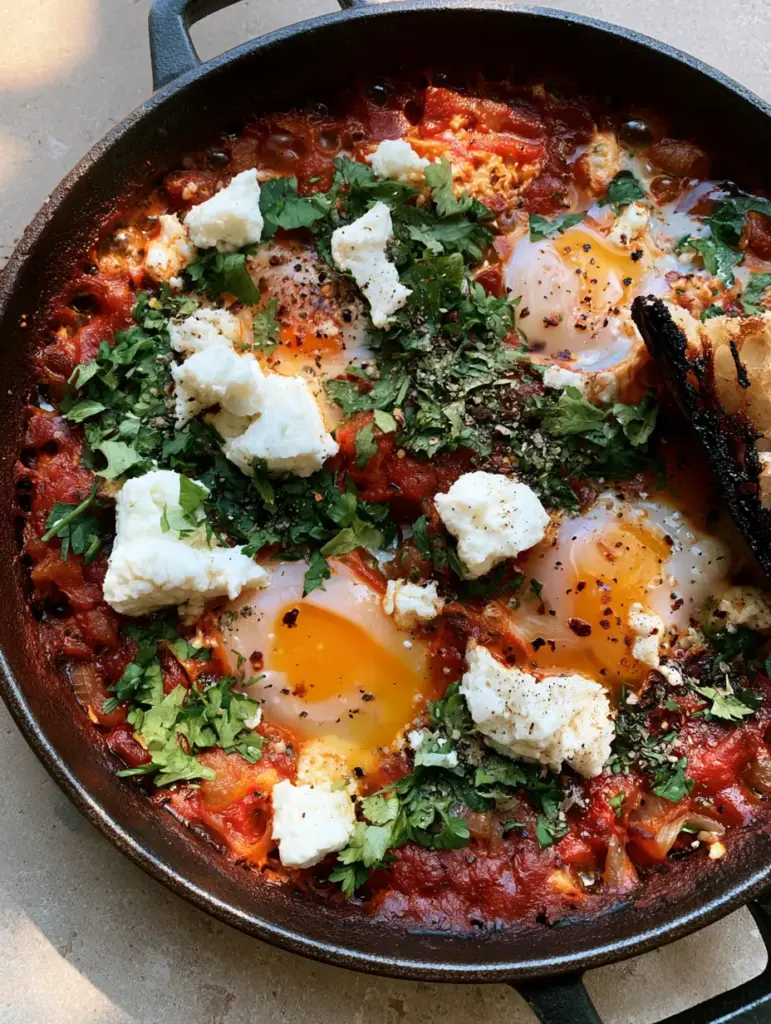
Our version stays true to the rustic roots seen in the finest Mediterranean cafes. Imagine a matte black cast iron skillet filled with a thick, chunky tomato and red bell pepper sauce, where every bite is punctuated by the salty tang of creamy feta and the bright burst of fresh herbs.
Whether you are hosting a weekend brunch or looking for a fast, one-pan dinner, this shakshuka recipe delivers professional results with minimal effort. The secret lies in the caramelization of the onions and the precise timing of those liquid golden centers.
Why This Skillet Shakshuka Recipe Works
- Textural Contrast: The combination of softened red bell peppers, chunky tomatoes, and velvety poached eggs creates a multi-dimensional mouthfeel.
- Visual Masterpiece: The deep crimson-red sauce provides a stunning backdrop for the snow-white egg whites and vibrant green cilantro and parsley.
- One-Pan Simplicity: From sautéing the aromatics to poaching the eggs, everything happens in one cast iron skillet for maximum flavor and minimum cleanup.
- Perfect Dipping: The sauce is specifically thickened to cling to pieces of charred, crusty sourdough bread.
Essential Elements for a Robust Tomato Base
Extra Virgin Olive Oil: 2 tbsp (30ml). This foundational fat is necessary to sear the vegetables and carry the fat-soluble flavors of the spices throughout the sauce.
Red Bell Peppers: 2 large (approx. 300g), diced. These provide the essential sweetness and “softened” texture that defines the chunky sauce base.
Yellow Onions: 1 medium (150g), finely diced. We cook these until they reach a translucent, caramelized state to provide a savory backbone to the acidity of the tomatoes.
Garlic: 3 cloves (15g), minced. A culinary necessity that adds aromatic depth; look for the fragrance to bloom without browning the bits.
Diced Tomatoes: 1 can (28 oz / 800g) of high-quality crushed or chunky tomatoes. This ensures the sauce remains thick and deep crimson-red rather than watery.
Poached Eggs: 4 to 6 large eggs. These are the star of the shakshuka recipe, requiring a gentle poach within the sauce to achieve firm whites and liquid golden-orange jammy yolks.
Feta Cheese: 1/2 cup (75g), crumbled. Use a high-quality sheep’s milk feta for those large, irregular creamy white crumbles that balance the heat of the sauce.
Fresh Herbs: 1/4 cup (10g) each of fresh cilantro and flat-leaf parsley. A dense scattering of green provides the necessary freshness to cut through the richness.
Spices & Seasoning: 1 tsp (2g) smoked paprika, 1/2 tsp (1g) cumin, 1 tsp (6g) kosher salt, 1/2 tsp (1g) cracked black pepper, and 1/2 tsp (0.5g) red chili flakes.
The Best Tools for Skillet Poaching
For the best results, a 10-inch or 12-inch matte black cast iron skillet is highly recommended. The heavy bottom retains heat evenly, ensuring the sauce simmers consistently and the eggs poach without the bottom of the sauce burning.
You will also need a sturdy wooden spoon for scraping the caramelized bits (fond) off the bottom of the pan and a tight-fitting lid to help set the egg whites during the final stages of cooking.
The Step-by-Step Method for a Perfect Shakshuka Recipe
Building the Aromatic Foundation
Heat the olive oil in your cast iron skillet over medium heat. Add the diced red bell peppers and onions, sautéing for 8-10 minutes. You are looking for the onions to become translucent and the peppers to soften significantly, showing slight caramelization at the edges.
Add the minced garlic, smoked paprika, cumin, and red chili flakes. Stir constantly for 60 seconds until the spices smell toasted and fragrant. This step “blooms” the spices, intensifying the deep crimson-red color of the final shakshuka recipe.
Simmering the Chunky Crimson Sauce
Pour in the chunky tomatoes and season with salt and cracked black pepper. Reduce the heat to low-medium and let the sauce simmer for 15 minutes. The sauce should thicken until it is “chunky” and stays separated when you draw a spoon through it.
Taste the sauce at this stage. If the tomatoes are too acidic, add a tiny pinch of sugar. The sauce should be bubbling gently with tiny simmer bubbles appearing around the edges of the skillet.
Mastering the Poached Eggs
Use the back of a large spoon to create four small wells in the simmering sauce. Carefully crack an egg into each well. To ensure the yolks stay liquid and golden-orange, do not disturb them once they are in the pan.
Cover the skillet with a lid and cook for 5-8 minutes. Watch closely: you want the whites to be firm and opaque, but the yolks should still have a visible jiggle when the pan is gently shaken. This is the hallmark of a professional shakshuka recipe.
The Final Garnish and Presentation
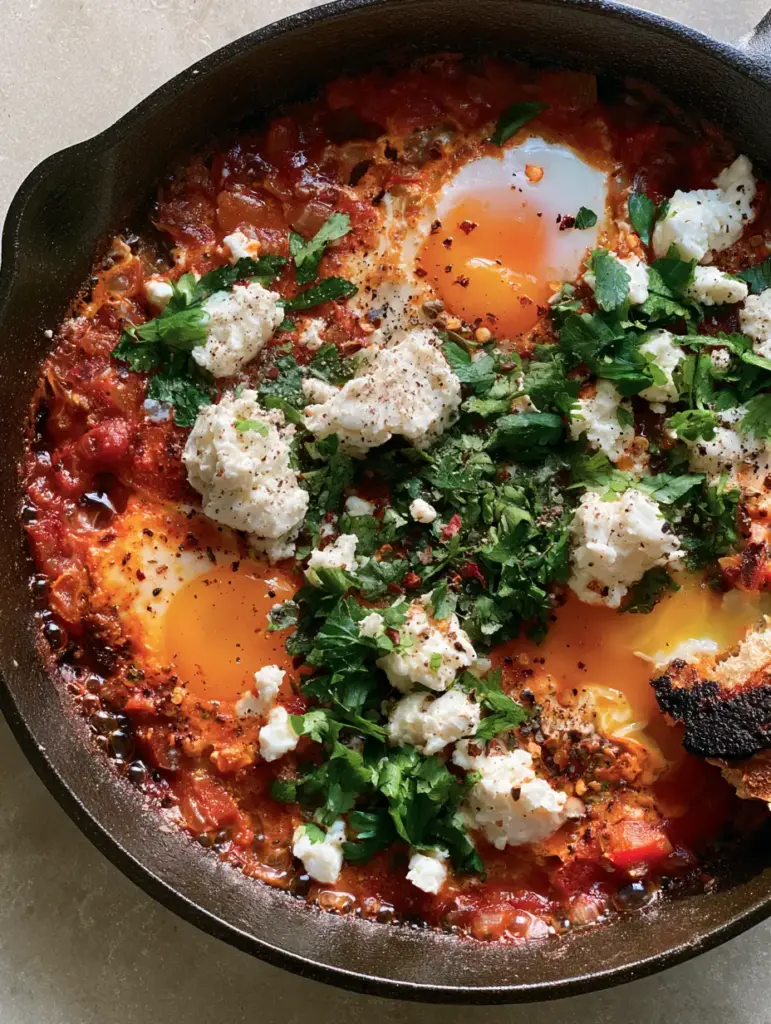
Remove the skillet from the heat immediately to stop the cooking process. Sprinkle the large, irregular crumbles of white feta cheese over the top so they soften slightly from the residual heat.
Finish with a heavy, dense scattering of vibrant green flat-leaf parsley and cilantro. Add a final dusting of cracked black pepper and a few more red chili flakes for visual pop and a heat kick.
Expert Tips for Visual and Flavor Success
- Room Temperature Eggs: Using eggs straight from the fridge can drop the sauce temperature; let them sit out for 10 minutes for a more even poach.
- Don’t Overcook the Yolks: The yolks will continue to cook slightly even after you remove the pan from the heat, so pull them when they are still jammy.
- Char the Bread: For the best experience, serve with charred sourdough bread. The slight bitterness of the char balances the sweet peppers.
- Add Texture: If you enjoy more crunch, you could serve this alongside crispy parmesan bites or even crispy feta rolls for a full appetizer spread.
What to Serve with Your Skillet Shakshuka
While this shakshuka recipe is a meal on its own, it pairs beautifully with other Mediterranean-inspired sides. If you are serving this for a hearty dinner, consider pairing it with creamy garlic potatoes to soak up the extra tomato sauce.
For a lighter lunch, a simple cucumber salad or even oven-baked cucumber chips can provide a refreshing, crunchy contrast to the warm, soft textures of the skillet eggs.
Storage, Reheating, and Make-Ahead Advice
Shakshuka is best enjoyed immediately while the yolks are liquid. However, you can prepare the tomato and pepper sauce up to 3 days in advance. Simply store the sauce in an airtight container in the refrigerator.
To reheat, bring the sauce back to a simmer in a skillet, then follow the steps to poach fresh eggs. We do not recommend freezing the cooked eggs, as the texture becomes rubbery upon thawing.
Absolutely. You can increase the red chili flakes or add a diced jalapeño or serrano pepper when sautéing the red bell peppers and onions.
The egg whites should be completely opaque and firm to the touch, while the yolks should still jiggle slightly when you move the skillet, indicating a jammy, liquid center.
A crusty, charred sourdough is ideal as its structure holds up to the thick sauce, while the sour notes balance the sweetness of the caramelized peppers and tomatoes.
Simmering the sauce uncovered for at least 15 minutes allows excess moisture from the tomatoes to evaporate, resulting in a chunky, crimson-red base that holds the eggs perfectly.
The Ultimate Shakshuka Recipe
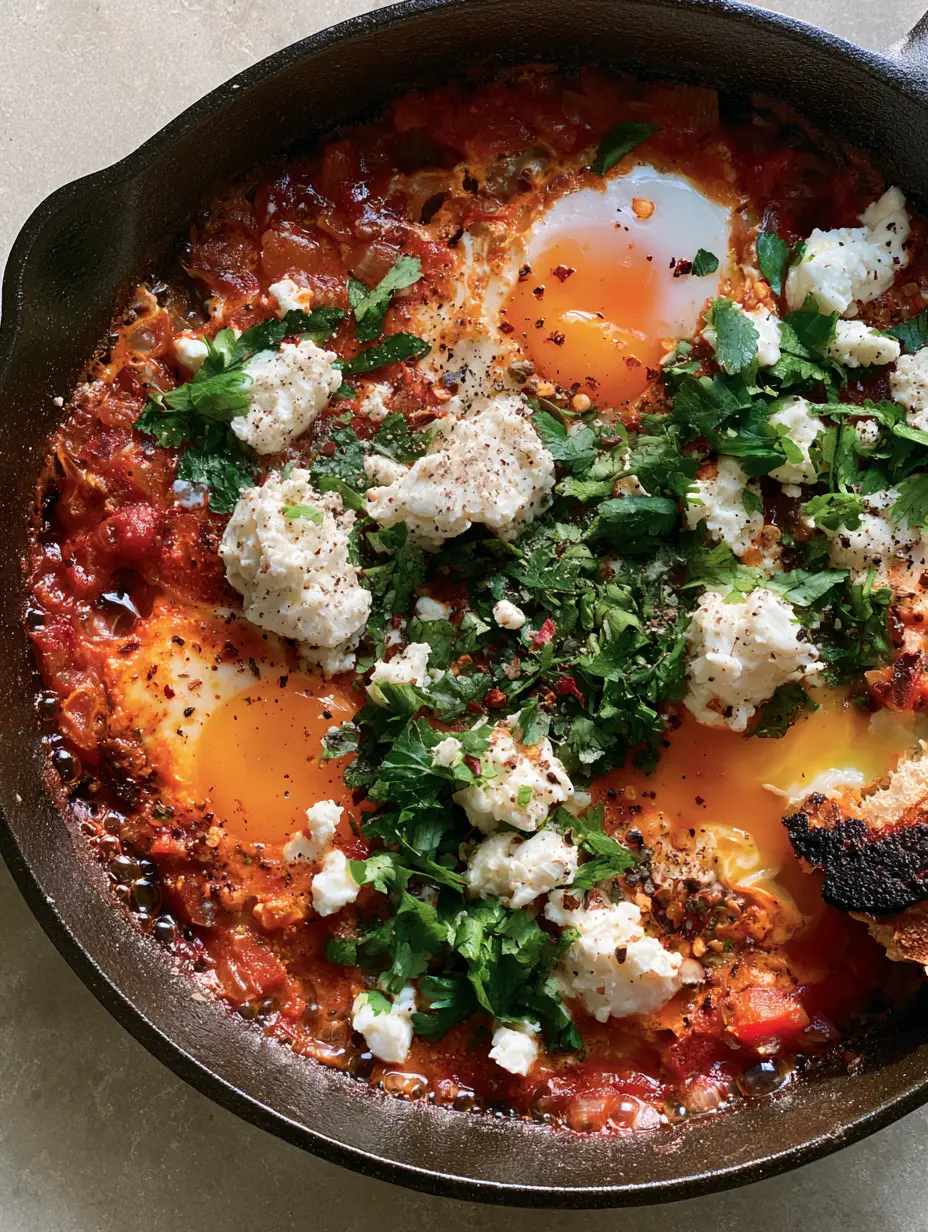
Shakshuka Recipe: The Ultimate Mediterranean Skillet Poached Eggs
Ingredients
Equipment
Method
- Heat oil in the skillet and sauté peppers and onions for 10 minutes until softened and caramelized.
- Add garlic and spices, stirring for 60 seconds until fragrant.
- Add tomatoes and simmer for 15 minutes until the sauce is deep crimson and chunky.
- Make four wells in the sauce and crack an egg into each.
- Cover and cook for 5-8 minutes until whites are firm but yolks remain golden and jammy.
Notes
Do not overcook the eggs; they should be jammy for the best dipping experience.

Bring the Mediterranean to Your Kitchen
This shakshuka recipe is more than just a meal; it is a sensory experience of sight, smell, and taste. The combination of the rustic cast iron skillet, the vibrant crimson sauce, and those perfect jammy yolks makes it a standout dish for any occasion. Don’t forget to dip your charred sourdough deep into those liquid golden centers!
If you loved this recipe, please leave a comment below and let us know how your poached eggs turned out! Be sure to follow us on Pinterest for more skillet inspiration and share your creations using our hashtag.